

Imagine landing in Berlin for your dream job, only to face a rental market where prices have skyrocketed 107% since 2015. You scroll through endless listings, dodge suspicious offers, and wonder if finding a fair place to live is even possible. For many newcomers, this is the first real shock of expat life in Germany.
You’re not alone. More than 52.3% of Germans rent their homes, and studies show expats often pay 10% more on average. The good news? The German rental law 2025 reforms bring fresh protection. With a stronger rent cap (Mietpreisbremse) and expanded tenant rights, these changes could save you hundreds of euros every year and give you more peace of mind when signing a lease. Understanding the New Rental Law is essential for navigating these changes.
This guide breaks down the new Mietrecht changes 2025 in plain English. We’ll cover:
Understanding the New Rental Law for Expats
- How the rent cap in Germany 2025 limits landlord price hikes.
- What new tenant rights Germany expats should know about deposits, repairs, and evictions.
- The rise of digital rental tools has made the process safer and less stressful.
German news outlets are full of updates, but clear English guides remain rare. That’s where this post comes in, your roadmap to secure, stable, and affordable housing in Germany’s tough rental market.
These changes aren’t just laws; they’re your shield. With the proper knowledge, you can navigate the system with confidence and protect your wallet in the process.
Meta description (SEO): Discover Germany rental law 2025 essentials: Rent cap Germany 2025 updates, tenant rights Germany expats must-knows, and tips for secure expat housing Germany.
Rental Market Stats: The Reality of Expat Housing in Germany in 2025
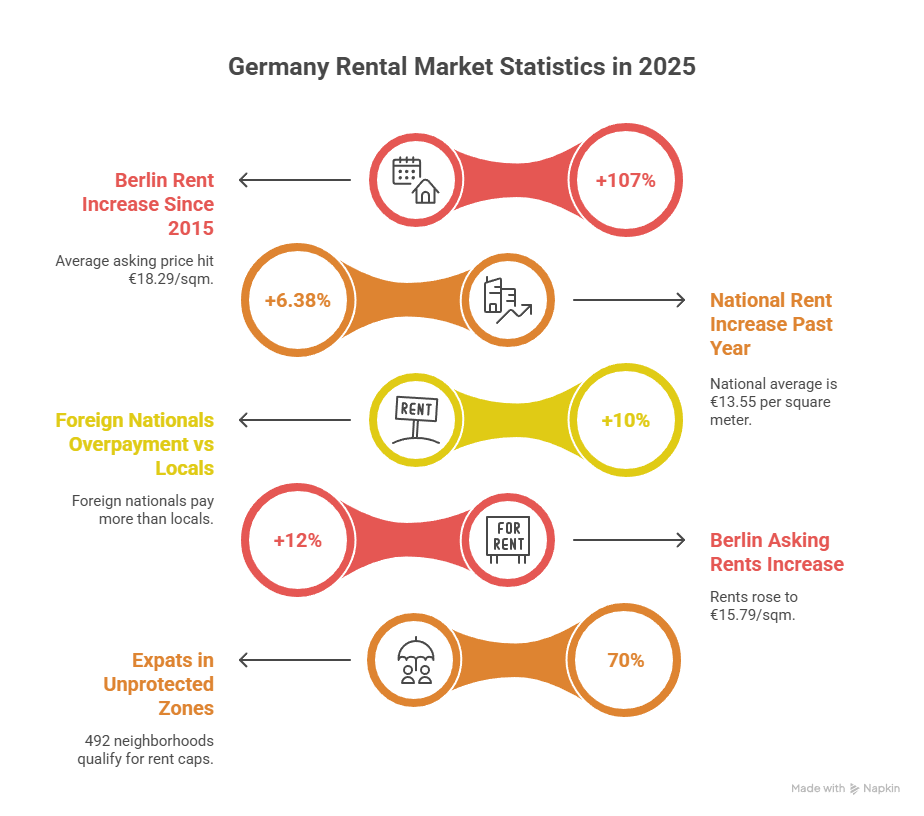
Rents in Germany have reached levels that shock even locals. In Berlin, the average asking price hit €18.29 per square meter in 2025, a 107% increase since 2015 (IamExpat). For newcomers, that makes the capital one of the hardest cities to settle in.
It’s not just Berlin. Across the country, rents climbed another 6.38% in the past year alone, bringing the national average to €13.55 per square meter (Federal Statistical Office). Foreign nationals often pay nearly 10% more than locals, partly due to language barriers and market bias.
The gaps in protection are even starker. In Berlin, asking rents rose 12% to €15.79/sqm, yet only 492 neighborhoods qualify for rent caps. That leaves about 70% of expats in unprotected areas, where landlords can set prices far above fair-market levels (Finanztip).
As a non-German speaker, you’re statistically twice as likely to sign an unfair contract or fall into a rental scam. These numbers aren’t doom-and-gloom; they’re the reason the Mietrecht changes of 2025 matter. Stronger rent caps and new tenant rights aim to level the playing field for expats navigating Germany’s complex housing market.
Visual Tip: Embed a simple infographic showing rent growth (2015–2025) vs. expat overpayment rates. Alt text: “Germany rental law 2025 infographic: rent growth and expat housing costs.”
Rent Cap Germany 2025: How It Protects Tenant Rights for Germany Expats
What Changed?
The Mietpreisbremse, literally “rent brake”, just got a significant extension. Originally set to expire at the end of 2025, it will now run until 2029.
Here’s what it means:
- In high-demand areas, landlords can charge no more than 10% above the local average rent for new leases.
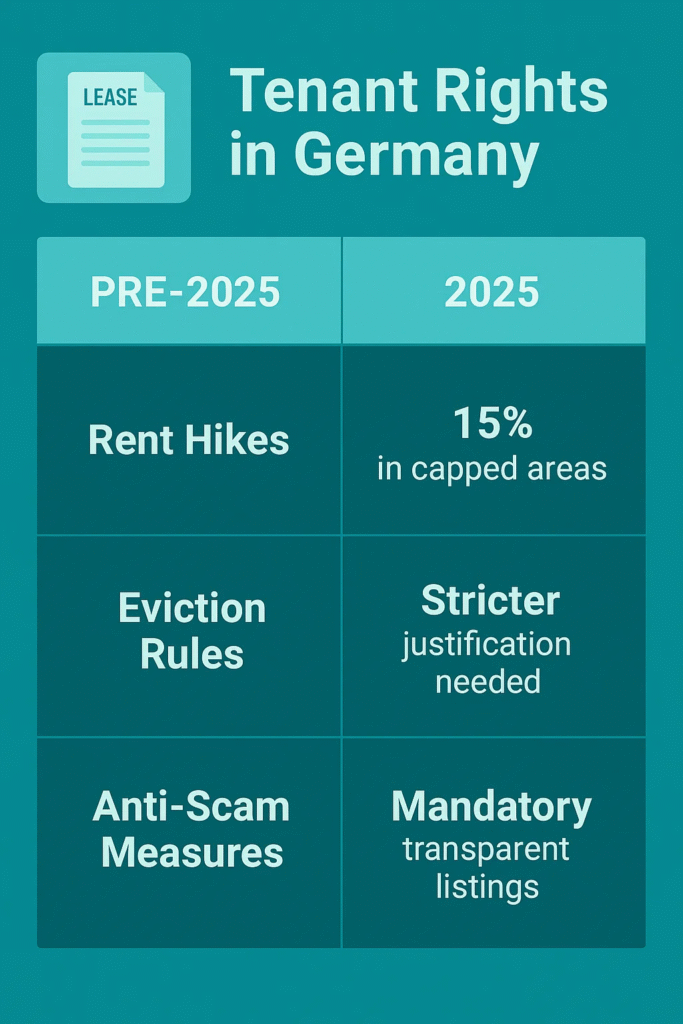
- Rent hikes for sitting tenants are capped at 15% over three years (down from 20%).
- This applies in so-called “tight housing markets” (angespannter Wohnungsmarkt), officially designated by state governments.
Think of it like a speed limit on your landlord’s pricing power. Without it, asking rents could spiral out of control.
Regional Impact
The rent cap in Germany 2025 isn’t nationwide. It applies in 492 hotspots, including Berlin, Munich, Hamburg, Frankfurt, and Cologne. Smaller university towns like Freiburg and Heidelberg also fall under it.
Expats should know: these areas are updated regularly, so check your city’s status via the federal housing portal (Bundesjustizministerium website). If your district qualifies, landlords must follow the cap, no matter how “special” the apartment is.
This helps stop the so-called “welcome premium” many expats face, where landlords charge foreigners more simply because they expect less resistance.
Expats’ Edge: How to Use the Cap
If you’re renewing or signing a lease in 2025, you can use the Mietpreisbremse to your advantage.
3 Steps to Check If Your Rent Qualifies:
- Look up your district: Confirm if it’s a capped zone.
- Compare your contract rent to the local average: Is it more than 10% above it?
- Request a formal review: Tenants can demand written proof of the rent calculation.
In practice, this could slash your rent by 5–10%, especially if you moved in during a “hot” year when prices peaked.
For expats, this reform is more than a bureaucratic tweak; it’s a lifeline in an overheated market.
Analogy: Imagine a supermarket suddenly freezing the price tag on essentials. That’s what the Mietpreisbremse does for your housing budget.
Mietrecht Changes 2025: Strengthening Tenant Rights for German Expats.
The German rental law 2025 goes beyond freezing prices. It also expands tenant rights, giving renters, especially expats, stronger tools to push back against unfair treatment.
Key Updates You Should Know
- Rent hikes curbed: For existing leases, increases are capped at 20% over three years. This blocks surprise surges that drain your budget.
- Anti-discrimination rules: Landlords can’t reject you based on nationality or language. Important when studies show expats pay 10% more on average.
- Deposit clarity: Landlords must return security deposits faster, with itemized statements.
Scam Safeguards
The reforms also target rental scams, a frequent headache for newcomers. From 2025:
- All listings must include complete rental breakdowns (base rent, service charges, deposit).
- Fake or misleading ads can be reported directly to the Consumer Protection Agency.
- Agents face fines for charging illegal “finder’s fees” (still banned under the Bestellerprinzip rule).
Stronger Eviction Protections
Evictions without cause are harder. Landlords in capped areas must show a legal reason—like personal use of the property- and give more notice. For many expats, this ends the fear of sudden displacement.
Why This Matters Now
With rents still rising 3.4% year-on-year in Q2 2025, these rules could prevent losses of €500+ annually. More importantly, they shift the balance: you’re no longer a powerless newcomer but a tenant with enforceable rights.
Takeaway: The Mietrecht changes 2025 mean you can rent smarter and safer. If a landlord pushes back, the law is on your side.
Visual Tip: Add a simple table: “Tenant Rights Before vs. After 2025”. Alt text: “Germany rental law 2025 tenant rights comparison chart.”
Digital Tools in Germany Rental Law 2025 for Smarter Contracts
The Mietrecht changes 2025 aren’t just about rent caps and tenant rights. They also mark the rise of digital housing tools designed to make renting simpler and safer—especially for expats.
The Digital Shift
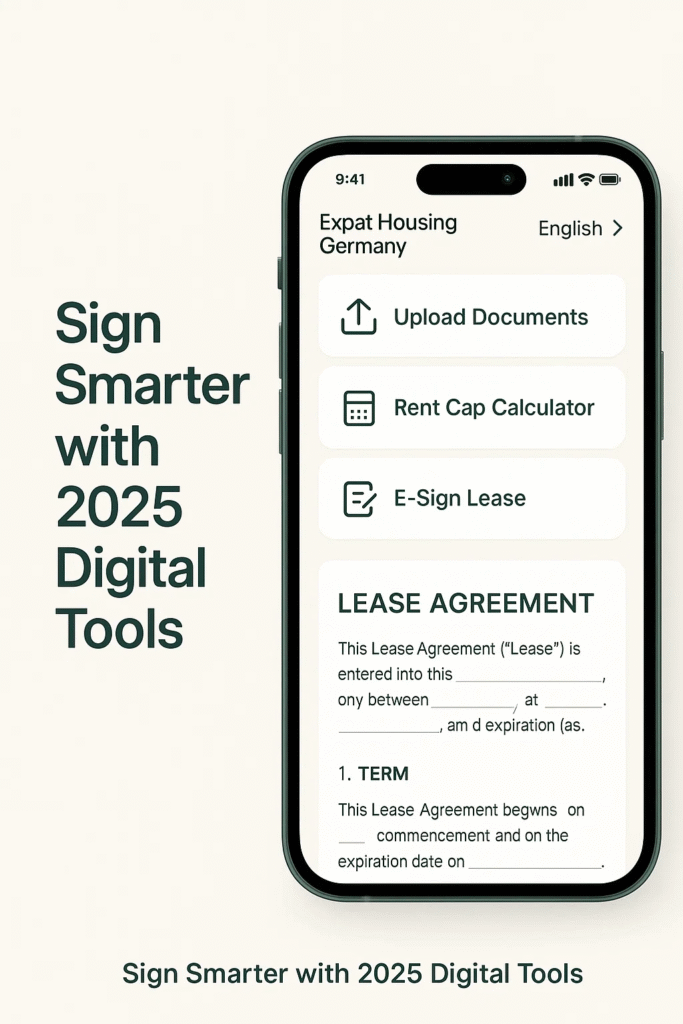
New platforms use AI-assisted checks and blockchain verification to cut paperwork and reduce scams. Apps like Conny.de already let tenants e-sign contracts, with systems that flag illegal clauses or hidden charges. Early data shows these tools can cut paperwork by 50%, while boosting transparency.
Why Expats Benefit Most
For internationals navigating Germany’s housing market, this is a game-changer:
- Upload in English: Translate and submit key documents for instant review.
- Remote signings: Secure your flat from abroad without mailing endless forms.
- Built-in legal support: Get alerts if your rent is above the official cap.
Think of it as having a digital lawyer in your pocket, a huge relief when German legal language feels overwhelming.
Smart Tip
Always use official portals or trusted apps. Federal sites now host rent calculators linked to local averages, so you can double-check your landlord’s numbers. Avoid old-school paper contracts with unclear clauses; they’re often where overcharges hide.
Takeaway: Gone are the days of faxed forms. With digital tools in the German rental law 2025, renting is becoming a smoother, scam-resistant process for expats.
Visual Tip: Add a screenshot-style graphic of a rental app dashboard. Alt text: “Digital contract tools Germany rental law 2025 for expats.”
Actionable Steps for Expats: How to Rent Smarter in 2025
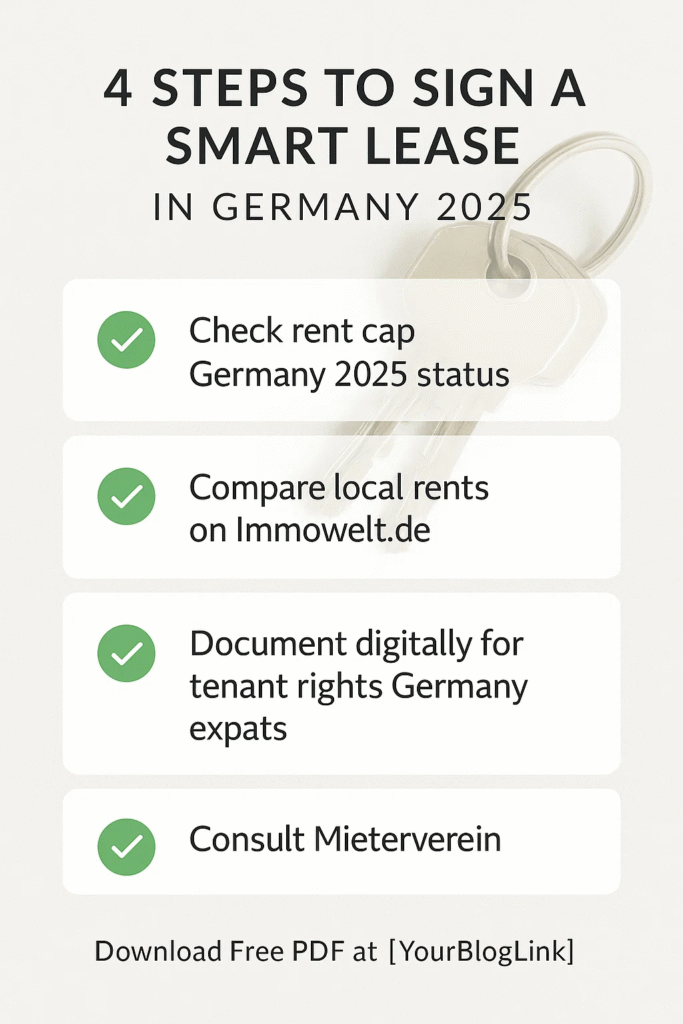
The German rental law 2025 puts new tools in your hands, but you still need to use them wisely. Here’s a step-by-step checklist to protect your wallet and secure a fair contract.
Your 2025 Rental Checklist
- Verify your rent cap status: Check if your district is covered by the rent cap Germany 2025 via the federal housing portal.
- Negotiate with facts: Use platforms like Immowelt.de or Wohnungsbörse.net to compare local rents before signing.
- Document everything digitally: Store contracts, messages, and receipts in cloud storage. This protects your tenant rights as a German expat if disputes arise.
- Consult legal hotlines: Call free advice lines or join a local Mieterverein (tenant association). They’ll explain your rights in English and even write letters on your behalf.
Red Flags to Avoid
- “Temporary use” loopholes: Some landlords label leases as Zwischennutzung (short-term use) to bypass rent caps, common in Berlin.
- Cash-only requests: Always insist on bank transfers to create a record.
- Hidden service charges: Scrutinize Nebenkosten (utilities and fees), as they can inflate costs by 20%.
Pro Tip for 2025
Budget a 10% buffer for utilities. With rising CO₂ taxes this year, energy bills are expected to climb, even if rent is capped.
Takeaway: Armed with these steps, you’ll rent like a local, confident, cost-savvy, and protected.
CTA: [Grab our free Mietrecht changes 2025 checklist PDF] to save and share with fellow expats.
Visual Tip: Create a numbered infographic of this checklist. Alt text: “Checklist: How expats can navigate Germany rental law 2025.”
Conclusion: Secure Your Slice of Germany, One Informed Lease at a Time.

From the rent cap Germany 2025 extension to stronger protections and digital tools, the new Mietrecht changes 2025 give expats a real chance to level the playing field. Renting in Germany no longer has to feel like roulette; armed with the right knowledge, you can make smarter choices and avoid costly mistakes.
Don’t let unfair contracts or scams win. Knowledge is your best deposit return.
💬 Share your 2025 rental wins or questions in the comments below, and 📩 subscribe for more expat housing Germany tips and guides.
Germany is home to you now, so rent it right.
FAQs: Germany Rental Law 2025 for Expats
1. What is the Mietpreisbremse in Germany?
The Mietpreisbremse (rent brake) limits new rents in high-demand areas to 10% above the local average. It was extended until 2029 under the German Rental Law 2025.
2. Does the rent cap in Germany 2025 apply everywhere?
No. It only applies in designated tight housing markets (e.g., Berlin, Munich, Hamburg). You can check if your district qualifies on the federal housing portal.
3. How much can my landlord increase rent in 2025?
For existing leases, rent hikes are capped at 20% over three years (15% in capped areas). Larger jumps are not allowed.
4. What new tenant rights do expats get in 2025?
Key updates include faster deposit returns, clearer listings, and tougher rules against unfair evictions. Anti-discrimination protections also aim to reduce the “expat premium.”
5. How can I avoid rental scams in Germany?
- Never pay cash or sign without a contract.
- Use trusted portals (Immowelt, Immonet).
- Report shady ads to the Consumer Protection Agency.
6. Can I sign a German lease digitally now?
Yes. New digital rental platforms allow secure e-signatures and even AI-assisted contract reviews, ideal for expats renting from abroad.
7. What should I budget beyond base rent in 2025?
Plan for +10% utilities due to rising CO₂ taxes, plus deposits (usually 2–3 months’ rent).

 English
  German