

Navigating Germany’s Evolving Migration Landscape in 2026
Germany’s migration policy is entering a new phase in 2026. The country continues to face serious labor shortages across key sectors such as logistics, hospitality, healthcare, and agriculture. At the same time, migration remains a central political issue. The result is a series of reforms designed to strike a balance: opening doors for faster integration into the labor market while tightening certain long-term immigration rules. This includes the introduction of the New Asylum framework, which aims to streamline processes.
For many migrants and asylum seekers, these changes could create meaningful opportunities. One of the most important updates in the Germany asylum work rules 2026 is faster access to employment. In many cases, asylum seekers can now begin working after just three months in the country instead of waiting six months as before. While this change may seem small, it can significantly affect how quickly newcomers achieve financial independence and begin integrating into German society.
The New Asylum initiative is expected to complement existing measures and enhance job opportunities for migrants.
Germany is also continuing its support for people displaced by the war in Ukraine. Temporary protection for Ukrainians has been extended again, allowing families to continue working, studying, and rebuilding their lives without the immediate uncertainty of losing their status. At the same time, policymakers are debating adjustments to citizenship rules and asylum procedures as part of broader discussions around the new German migration laws 2026.
For migrants already living in Germany, or those planning to move there, understanding these updates is essential. Immigration regulations often evolve quickly, and small details can influence work rights, residence permits, or long-term settlement options. Business organizations have also emphasized the economic potential of these reforms. Industry groups estimate that allowing asylum seekers to work after three months could unlock around 40,000 additional workers in sectors currently struggling to fill vacancies.
This guide explains what the latest reforms mean in practice. From quicker job access to extended protections for Ukrainians and debates around citizenship, here’s what you need to know.
The Big Change: Asylum Seekers Can Work After Just Three Months
One of the most significant updates in the Germany asylum work rules 2026 is the shorter waiting period before asylum seekers can enter the workforce. The change is linked to Germany’s “Sofort-in-Arbeit” or “Immediate Work” initiative, which aims to help migrants integrate faster while also addressing shortages in the labor market.
Previously, most asylum seekers had to wait six months before applying for work authorization. Under the new framework, many applicants can begin working after three months, provided their asylum case is progressing through the normal procedure. This reform also aligns with broader European changes linked to the Common European Asylum System, which seeks to standardize asylum practices across the EU.
In practice, the rule applies to many asylum seekers whose applications are being processed in Germany. However, there are still some exceptions. Applicants from countries classified as safe countries of origin may face stricter limitations, and cases handled under the Dublin Regulation, which determines which EU country is responsible for an asylum claim, can also involve additional restrictions.
Even after the three-month period, some administrative steps remain. A job offer is typically required, and the position may still need approval from the Federal Employment Agency. In certain roles, especially outside shortage occupations, authorities may conduct a labor market test to ensure no local worker is available for the position. However, these procedures have become faster and more streamlined in recent years.
Importantly, taking a job does not influence the outcome of an asylum application. Employment neither strengthens nor weakens a protection claim, it simply allows individuals to support themselves while the legal process continues.
Consider a simple example. A Syrian asylum seeker arriving in Germany in March 2026 could potentially start working by June if they receive a job offer and meet the eligibility requirements. In sectors like logistics or hospitality, where employers regularly face staff shortages, such opportunities are becoming increasingly common.
Statistics Showing the Impact of Faster Work Access
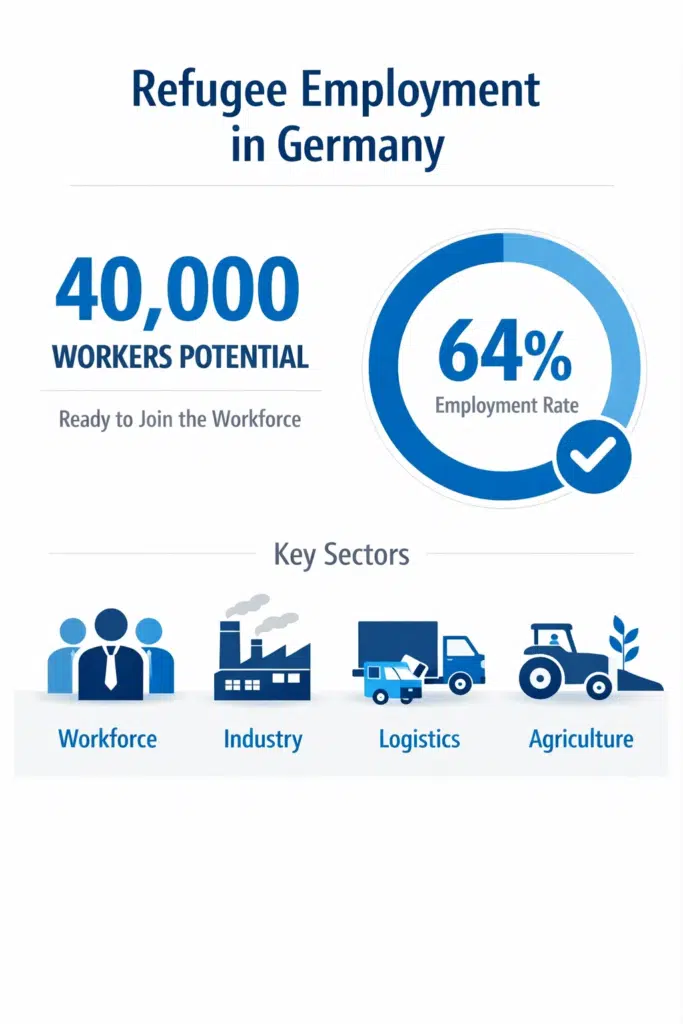
Research from German economic and migration institutions suggests that earlier access to work can significantly improve integration outcomes. When refugees enter the workforce sooner, they gain language skills more quickly, expand their professional networks, and become financially independent earlier.
According to projections from the German Chamber of Commerce and Industry, allowing asylum seekers to work after three months could add around 40,000 workers to the German labor market in the near term. Many of these jobs are expected to appear in industries such as logistics, agriculture, hospitality, and construction.
Long-term data also supports the importance of early employment. Research conducted by the Institute for Employment Research shows that refugees who arrived during the 2015 migration wave have achieved steadily rising employment rates. Today, around 64 percent of that cohort is employed, with employment rates among men reaching roughly 76 percent.
For policymakers, these numbers highlight the economic advantages of faster workforce integration. Earlier employment reduces reliance on social benefits, increases tax contributions, and helps address Germany’s demographic challenges. The Federal Office for Migration and Refugees also identifies employment as one of the strongest indicators of successful long-term integration.
For migrants themselves, the message is encouraging. The sooner individuals can begin working, the sooner they can start building stability, experience, and independence in their new country.
Extended Protections for Ukrainians in 2026
While some migration policies are tightening, Germany has maintained strong protections for people displaced by the war in Ukraine. Temporary protection under Section 24 Residence Act (AufenthG) has been extended until March 4, 2027.
For many Ukrainians already living in Germany, this extension provides crucial stability. In most cases, individuals do not need to submit a new application if their current residence permit remains valid. Local immigration offices will continue updating documents gradually, but the legal protection itself remains in place.
The status allows Ukrainians to live and work in Germany, enroll in schools or universities, and access healthcare and integration services. Many residents have also entered vocational training programs or begun working in sectors facing staff shortages.
Authorities are also encouraging people to consider long-term options. Some Ukrainians may choose to transition to other residence permits, such as skilled worker visas, student permits, or family reunification pathways. These options can provide a clearer path toward permanent residence in the future.
For updates and official information, the German government maintains the portal Germany4Ukraine, which offers multilingual guidance on housing, employment, legal status, and integration programs.
Citizenship Debates and Broader Migration Reforms
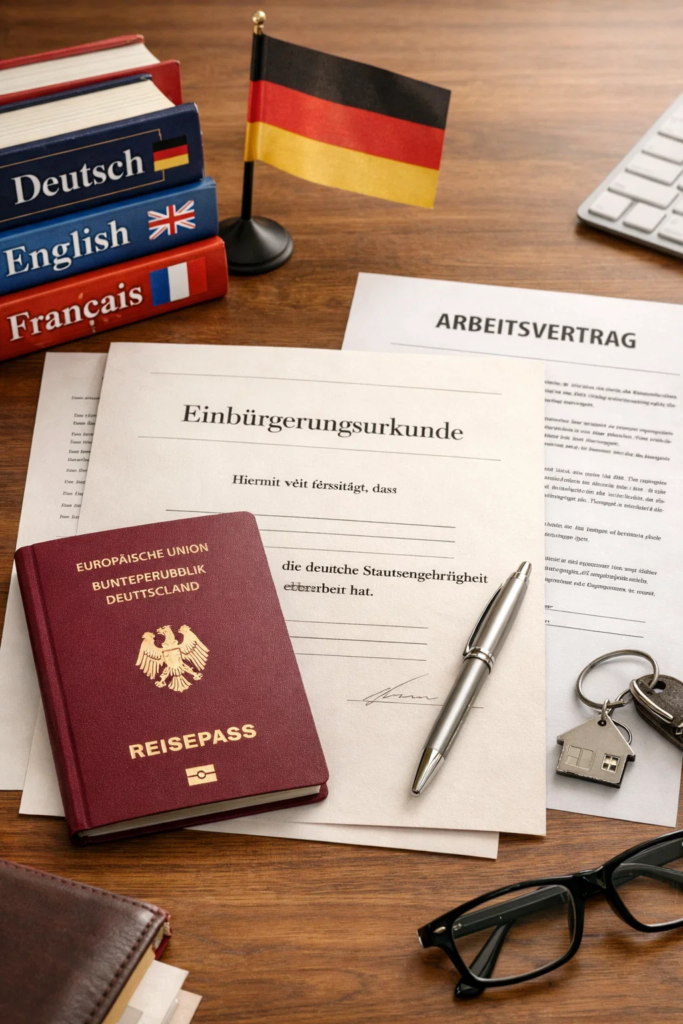
Alongside the reforms encouraging employment, Germany is also debating stricter rules for long-term settlement and citizenship. Policymakers argue that naturalization should reflect strong integration into society.
One proposed change is the abolition of the three-year fast-track naturalization option that was previously available for exceptionally well-integrated migrants. Under the updated framework, the standard pathway of around five years of residence remains the main route to citizenship.
Political discussions involving parties such as the CDU/CSU have focused on strengthening requirements related to language proficiency, employment, and financial independence. However, the possibility of holding dual citizenship remains available in many cases.
At the same time, Germany is adjusting parts of its asylum system in line with the updated Common European Asylum System. Some reforms include faster border procedures and stricter enforcement of asylum obligations, particularly when applicants do not cooperate with authorities.
While work access is becoming easier for many newcomers, these developments highlight a broader message from policymakers: long-term residency and citizenship will depend heavily on sustained integration.
Practical Steps for Migrants Arriving in 2026
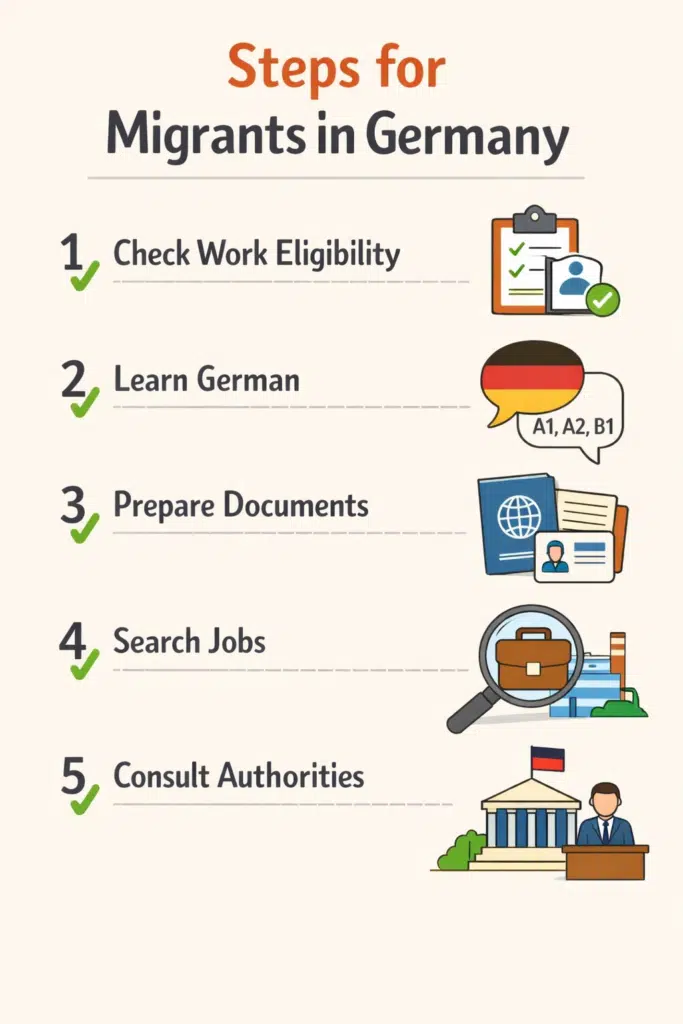
For migrants navigating these changes, preparation is essential. The first step is understanding your legal status and work eligibility through official authorities such as the Federal Office for Migration and Refugees or your local immigration office (Ausländerbehörde)
Once work eligibility is confirmed, preparing key documents can help accelerate job searches. These typically include your residence permit or asylum registration, a basic CV, language certificates if available, and any job offer letters from potential employers.
Starting the job search early can also make a significant difference. Many migrants find their first opportunities in sectors facing labor shortages, including logistics, hospitality, healthcare support roles, and agriculture. Public job portals operated by the Federal Employment Agency are a useful starting point.
Language learning remains another crucial step. Participation in integration and German language courses not only improves employment prospects but also strengthens future applications for permanent residency or citizenship.
Migrants should also be cautious of scams. False job offers or promises of guaranteed visas sometimes target newcomers unfamiliar with German regulations. Official government sources and trusted organizations are the safest places to confirm information.
Turning Policy Changes into Personal Opportunities
Germany’s migration landscape in 2026 reflects an effort to balance humanitarian responsibilities with economic realities. Faster access to work for asylum seekers, continued protection for Ukrainians, and evolving citizenship policies all form part of this broader strategy.
For migrants, the most important takeaway is that early integration matters. Learning German, gaining work experience, and staying informed about legal developments can significantly improve long-term prospects in the country.
Research consistently shows that refugees who enter the workforce earlier achieve stronger long-term outcomes. With the new rules allowing asylum seekers to work after three months, those opportunities are now more accessible than before.
Migrants currently living in Germany may want to review their legal status, explore employment options, and follow updates from official institutions. Sharing experiences and staying connected with trusted information sources can also help newcomers navigate the system more confidently.
Helpful resources
- Federal Office for Migration and Refugees
- Federal Employment Agency
- Germany4Ukraine
Immigration rules can change quickly, so it is always wise to verify information through official authorities or professional advisors before making important decisions.
For many newcomers, the reforms of 2026 could mark the beginning of a faster path toward employment, independence, and long-term stability in Germany.

 English
  German