

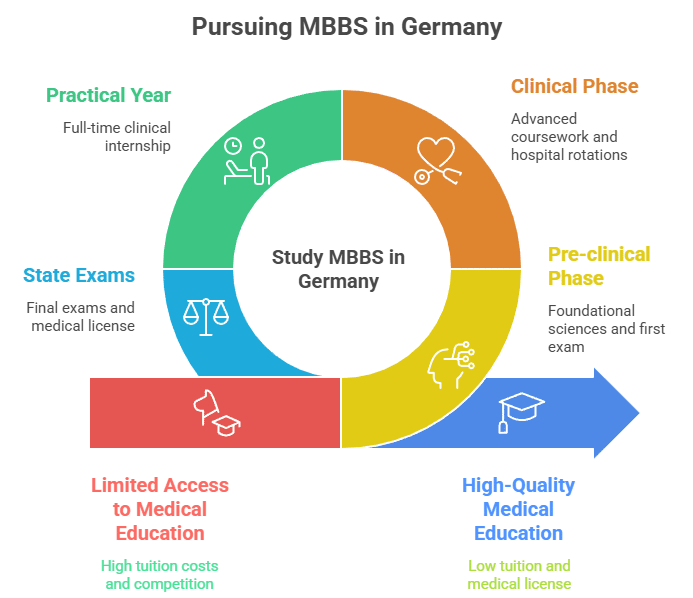
Medizinstudium („MBBS“) Ein Medizinstudium in Deutschland ist aufgrund der hohen Bildungsqualität und der niedrigen Studiengebühren eine attraktive Option. In Deutschland ist das Medizinstudium als sechsjähriges Programm (plus einige Monate) strukturiert und führt zum Abschluss. Staatsexamen und ein medizinische Lizenz (Genehmigung). Das Programm wird typischerweise unterrichtet auf Deutschund beinhaltet:
- Präklinische Phase (2 Jahre): Grundlagenwissenschaften (Anatomie, Physiologie usw.), die mit dem ersten Staat enden Prüfung.
- Klinische Phase (3 Jahre): fortgeschrittene medizinische Studiengänge mit Krankenhausrotationen in verschiedenen Bereichen Spezialgebiete.
- Praktisches Jahr (1 Jahr): Vollzeit klinisch Praktikum in verschiedenen Fachbereichen (z. B. Innere Medizin, Chirurgie), gefolgt von den staatlichen Abschlussprüfungen und der Ausstellung des Doktortitels ärztliche Zulassung.
Deutschlands öffentliche medizinische Universitäten erheben Gebühren keine Studiengebühren Bei diesen Studiengängen zahlen Studierende nur einen geringen Semesterbeitrag. Das macht Deutschland zu einem der günstigsten Studienorte für Medizin. Die Zulassung ist jedoch schwierig. hochkompetitiv Aufgrund begrenzter Studienplätze und hoher akademischer Standards werden fast alle Studiengänge auf Deutsch unterrichtet (da die klinische Ausbildung Deutsch beinhaltet). deutschsprachig Internationale Studierende müssen sich daher auf gute Deutschkenntnisse einstellen. In den folgenden Abschnitten werden die Voraussetzungen, das Bewerbungsverfahren, die Kosten und die verfügbaren Ressourcen für indische Studierende erläutert, die ein Medizinstudium (MBBS) in Deutschland anstreben.
Zulassungskriterien für indische Studierende
Die Zulassung zu einer deutschen medizinischen Universität setzt die Erfüllung mehrerer akademischer und regulatorischer Kriterien voraus:
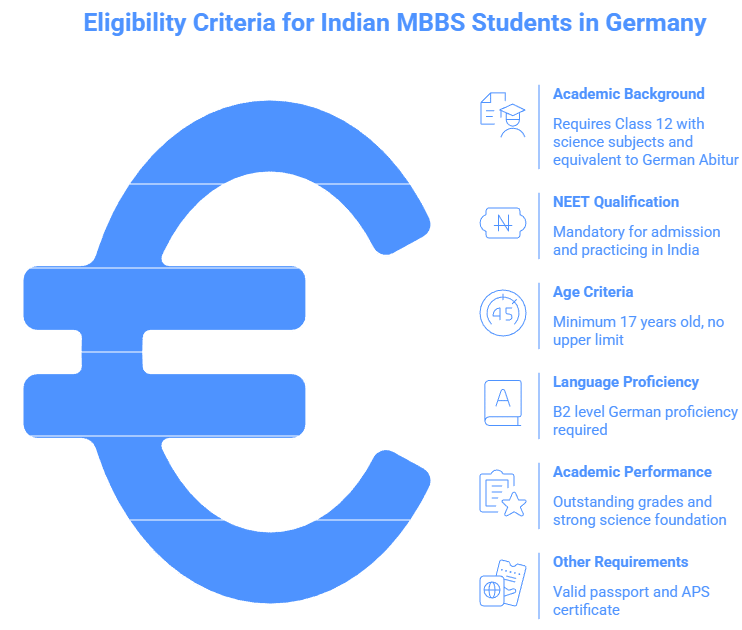
- Akademischer Hintergrund: Sie müssen die 12. Klasse mit naturwissenschaftlichen Fächern (Physik, Chemie, Biologie) und guten Noten abgeschlossen haben. Deutsche Universitäten verlangen Qualifikationen, die dem deutschen Abitur gleichwertig sind. Abitur (Hochschulzugangsberechtigung). Für indische Schüler ist ein reguläres Abitur (Klasse 12) erforderlich. Eine Untersuchung allein ist normalerweise nicht als gleichwertig angesehen mit Abitur. Es gibt zwei Wege um diese Lücke zu schließen: entweder vollständig ein Jahr Bachelorstudium in einem verwandten Fachgebiet an einer anerkannten indischen Universitätoder vervollständigen Sie eine Studienkolleg (Grundkurs) in Deutschland und bestehen Sie die Feststellungsprüfung Prüfung. Viele Studenten entscheiden sich für die einjährige Prüfung. M-Kurs Studienkolleg (mit Schwerpunkt Medizin/Biologie) in Deutschland, falls sie noch kein Jahr College absolviert haben; dieses auf Deutsch unterrichtete Vorbereitungsjahr bereitet auf das Medizinstudium vor.
- NEET-Qualifikation: Als Indischer Bewerber, Du muss die NEET-Qualifikation erfüllen. (Nationaler Eignungs- und Aufnahmetest). Ein gültiges NEET-Ergebnis ist sowohl für die Zulassung als auch für die spätere Berufsausübung in Indien mit einem ausländischen MBBS-Abschluss obligatorisch. Deutsche Universitäten setzen voraus, dass Sie den NEET-Test im laufenden oder im vorherigen Jahr bestanden haben., und die indischen Behörden verlangen eine NEET-Qualifikation für die Ausstellung eines Berechtigungsnachweis für ein Medizinstudium im Ausland.
- Alterskriterien: Sie sollten zum Zeitpunkt der Zulassung mindestens 17 Jahre alt sein. Es gibt in der Regel keine Altersgrenze nach oben. Alter Es gibt eine Altersgrenze für das Medizinstudium in Deutschland, aber beachten Sie, dass Visabeamte Bewerber über 30 Jahre genauer prüfen können. Die meisten Kandidaten beginnen ihr Studium im späten Teenageralter oder Anfang 20.
- Sprachkenntnisse: Deutsch Fließende Sprachkenntnisse sind Voraussetzung. Da praktisch alle staatlichen MBBS-Studiengänge auf Deutsch angeboten werden, verlangen Universitäten in der Regel mindestens B2 Niveau der Kompetenz (und C1 Ein Sprachnachweis wird häufig empfohlen/bevorzugt. Akzeptierte Nachweise sind beispielsweise der TestDaF (mit hohen Punktzahlen in allen Bereichen), die DSH-2- oder DSH-3-Prüfung, das Goethe-Zertifikat C1 oder das Telc Deutsch C1 Hochschule. Sie müssen zum Zeitpunkt der Bewerbung oder bei der Einschreibung ein Sprachzertifikat vorlegen. (Notiz: Einige private Institutionen verfügen über einige Englisch unterrichtet Medizinische Studiengänge sind zwar selten, aber man muss damit rechnen, Deutsch zu lernen, wenn man an einer staatlichen Universität studieren möchte.)
- Akademische Leistungen: Die Zulassung zum Medizinstudium in Deutschland ist extrem wettbewerbsintensiv. Einheimische Studierende benötigen oft hervorragende Noten Um einen Studienplatz zu erhalten, ist eine Note von mindestens 90% in indischen Noten erforderlich [20]. Internationale Bewerber stehen ebenfalls vor hohen Anforderungen – die Erfüllung der Mindestvoraussetzungen (z. B. 60% in den Fächern Physik, Chemie und Biologie) allein reicht wahrscheinlich nicht aus. Stärken Sie Ihr Profil durch hervorragende Noten, ein solides naturwissenschaftliches Fundament und, wenn möglich, relevante Erfahrungen oder eine entsprechende Motivation für das Medizinstudium, wie in Ihrer Bewerbung erläutert.
- Weitere Anforderungen: Sie benötigen ein/e gültiger Reisepass und muss eine APS-Zertifikat (Zertifizierung durch das Academic Evaluation Center) für indische, chinesische und vietnamesische Bewerber. Die APS-Zertifizierung dient der Vorabprüfung Ihrer akademischen Dokumente und ist nun Erforderlich für Studentenvisumanträge aus IndienDieser Prozess wird über das zuständige APS-Büro der deutschen Botschaft/des deutschen Konsulats in Indien abgewickelt und sollte rechtzeitig im Voraus eingeleitet werden.
Bewerbungsprozess (Schritt für Schritt)
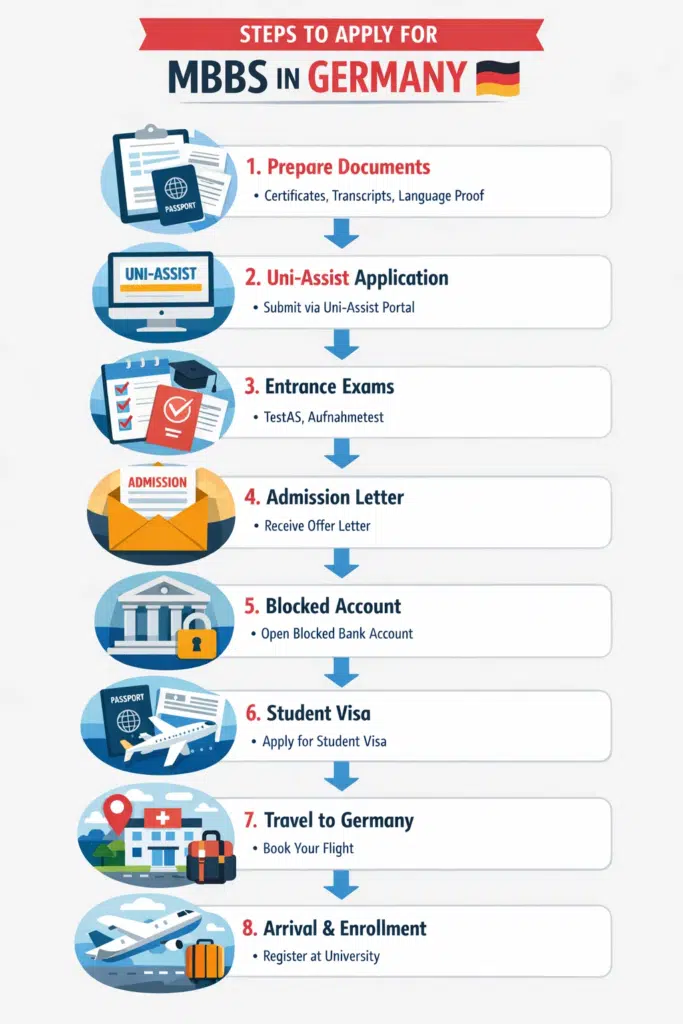
Die Zulassung zu deutschen medizinischen Universitäten erfordert sorgfältige Planung und mehrere Schritte. Im Folgenden finden Sie eine Übersicht. Schritt-für-Schritt-Anleitung:
1. Bereiten Sie Ihre Dokumente vor: Sammeln Sie alle erforderlichen Dokumente im vorgegebenen Format. In der Regel benötigen Sie Folgendes:
- Akademische Zertifikate: Zeugnisse und Zertifikate der 10. und 12. Klasse (mit Leiterplattenmarkierungen Idealerweise über 60%). Falls Sie bereits ein Semester oder ein Studienjahr absolviert haben, fügen Sie bitte auch die entsprechenden Zeugnisse bei.
- NEET-Ergebnisübersicht: Nachweis eines qualifizierenden NEET-Ergebnisses (Ergebnisbericht aus dem laufenden oder dem Vorjahr). Dies ist für indische Studierende obligatorisch.
- Reisepass: Ein gültiger Reisepass (mit einer Gültigkeit von mindestens 1 Jahr).
- Sprachzertifikat: Nachweis von Deutschkenntnissen (mindestens B1/B2 bei der Bewerbung; B2 oder C1 bei der Einschreibung). Wenn Sie planen, an einem StudienkollegViele Studiengänge setzen für die Teilnahme am Vorbereitungskurs ein B1-Niveau voraus. Für den direkten Hochschulzugang wird ein Niveau von B2/C1 erwartet.
- Motivationsschreiben/Zielsetzungserklärung: Ein Schreiben, in dem Sie Ihre Motivation für das Medizinstudium in Deutschland, Ihre Karriereziele und Ihre Gründe für die Wahl dieser Universität erläutern.
- Empfehlungsschreiben: Üblicherweise 1–2 akademische Empfehlungsschreiben von Lehrern oder Professoren, die Ihre Fähigkeiten bestätigen können.
- Lebenslauf: Ein Lebenslauf (vorzugsweise im Europass-Format), in dem Ihr Bildungshintergrund, relevante Praktika oder außerschulische Aktivitäten, Erfolge usw. aufgeführt sind.
- Passfotos: Ein Satz aktueller Passfotos (gemäß den Vorgaben).
- APS-Zertifikat: Sobald Sie das APS-Zertifikat erhalten haben, fügen Sie es bei, um zu bestätigen, dass Ihre Dokumente verifiziert wurden (gilt speziell für indische Studenten).
Stellen Sie sicher, dass alle akademischen Dokumente beglaubigt und, falls erforderlich, offiziell ins Deutsche oder Englische übersetzt sind. Sie benötigen beglaubigte Kopien für das Visum, daher ist es ratsam, mehrere Exemplare bereitzuhalten.
2. Forschungsuniversitäten und Studienkollegs: Wählen Sie die Universitäten aus, an denen Sie sich bewerben möchten. Es ist ratsam, sich an folgenden Universitäten zu bewerben: mehrere Universitäten aufgrund des starken Wettbewerbs. Prüfen Sie außerdem, ob Sie an einem/einer StudienkollegFalls Ihre Qualifikationen der 12. Klasse nicht als gleichwertig mit dem Abitur anerkannt werden (was in Indien üblicherweise der Fall ist), müssen Sie entweder:
- Beantragen Sie einen M-Kurs an einem Studienkolleg in Deutschland, oder
- Absolviere ein Jahr deines Bachelorstudiums in Indien und bewirb dich dann direkt für das MBBS-Programm.
Bewerbung zu einem Studienkolleg bedeutet, dass Sie erhalten Die Zulassung zum Studienkolleg erfolgt unter Auflagen. Nach bestandener Feststellungsprüfung sind Sie zum Medizinstudium (MBBS) zugelassen. Die Bewerbung für das Studienkolleg erfolgt häufig über die gleichen Online-Portale (uni-assist oder Hochschulbewerbungen) unter Auswahl der Option „Vorbereitungskurs“. Notiz: Auch Studienkollegprogramme haben Bewerbungsfristen und gegebenenfalls eigene Aufnahmeprüfungen (in der Regel Deutsch testen Sprachkenntnisse und grundlegende naturwissenschaftliche/mathematische Fähigkeiten).
3. Bewerben Sie sich über Uni-Assist oder das Universitätsportal: Die meisten deutschen Universitäten verwenden die Uni-Assist Plattform zur Verwaltung internationaler Bewerbungen. Sie erstellen ein Konto, laden alle erforderlichen Dokumente hoch, wählen Ihre Wunschuniversitäten/Studiengänge aus und bezahlen die Bearbeitungsgebühr. Die Gebühr für eine Bewerbung über Uni-Assist beträgt ca. 75 € für die erste Universität und ca. 30 € für jede weitere. Einige Universitäten (oder bestimmte Bundesländer) erheben eine Gebühr von ca. 75 € für die erste Universität. nicht Nutzen Sie nicht Uni-Assist, sondern bewerben Sie sich direkt über das Online-Portal der jeweiligen Universität – die genaue Vorgehensweise finden Sie auf der Webseite der internationalen Zulassungsstelle der Universität. Achten Sie darauf, sich vor Ablauf der Bewerbungsfristen zu bewerben. Wintersemester Aufnahme (Beginn im Oktober), die Bewerbungsfrist liegt oft bei etwa 15. Juli; für die kleineren Sommeraufnahme (Start im April, falls verfügbar), Fristen können sein bis 15. Januar(Die Aufnahmekriterien des Studienkollegs können abweichen, überprüfen Sie diese daher bitte ebenfalls.)
4. Aufnahmeprüfungen (falls vorhanden): Zusätzlich zu Ihren Noten können einige Universitäten bestimmte Aufnahmeprüfungen verlangen oder empfehlen:
- TestAS: Ein allgemeiner Eignungstest für ausländische Studierende. Ein gutes Ergebnis kann Ihre Bewerbung in manchen Fällen stärken.
- TMS (Test für Medizinische Studiengänge): Ein freiwilliger Eignungstest für Medizinstudierende, der kognitive Fähigkeiten und Kenntnisse prüft. Ein hoher TMS-Wert kann die Zulassungschancen zum Medizinstudium in Deutschland verbessern, da einige Universitäten dafür Bonuspunkte vergeben.
Prüfen Sie die Zulassungsvoraussetzungen der von Ihnen gewählten Universitäten – dort ist in der Regel angegeben, ob TMS- oder TestAS-Ergebnisse anerkannt werden. Diese Prüfungen werden üblicherweise im Voraus abgelegt (TMS wird einmal jährlich angeboten). Falls Sie die Prüfungen ablegen möchten, bereiten Sie sich entsprechend vor.
5. Warten Sie auf die Zulassungsentscheidung: Die Zulassungsergebnisse werden in der Regel einige Wochen nach Ablauf der Bewerbungsfrist bekannt gegeben. Wenn Sie ausgewählt werden, erhalten Sie eine Zulassungsschreiben (entweder unbedingt oder bedingt, wenn etwas noch aussteht, wie z. B. die Sprachzertifizierung oder der Abschluss des Studienkolleg). Wenn Sie sich für ein Studienkolleg bewerben, werden Sie möglicherweise zunächst zum Vorkurs zugelassen; nach bestandener Feststellungsprüfung erhalten Sie einen Studienplatz. Aufgrund der hohen Nachfrage kann es sein, dass Sie auf einer Warteliste landen oder nur an einer weniger bevorzugten Universität angenommen werden – seien Sie auf alle Möglichkeiten vorbereitet.
6. Finanzielle Vorbereitung – Sperrkonto: Sobald Sie eine Zulassungszusage erhalten haben, bereiten Sie sich auf das Studentenvisum vor. Deutschland verlangt den Nachweis ausreichender finanzieller Mittel für Ihren Lebensunterhalt. Die meisten indischen Studierenden erbringen dies durch die Eröffnung eines Studentenkontos. Gesperrtes Konto (Sperrkonto) in Deutschland. Sie müssen einen festgelegten Betrag einzahlen (derzeit €11,904 Sie können ab 2025 für ein Jahr einen Betrag von ca. 12–13 Lakh ₹ (nach aktuellem Wechselkurs) auf dieses Konto einzahlen. Mit diesem Sperrkonto können Sie während Ihres Studiums monatlich ca. 992 € für Ihren Lebensunterhalt abheben. Verschiedene Anbieter (wie Fintiba, Expatrio und die Deutsche Bank) bieten Sperrkonten an. internationale StudierendeRichten Sie dies ein paar Monate vor Ihrer Abreise ein. Vereinbaren Sie außerdem Folgendes: Krankenversicherung Die Krankenversicherung ist bei der Einreise obligatorisch. Eine studentische Krankenversicherung in Deutschland kostet etwa 80–160 € pro Monat[32]. Für die Visumsphase reicht zunächst eine Reiseversicherung aus, nach der Immatrikulation ist jedoch der Wechsel zu einer gesetzlichen oder privaten deutschen Krankenversicherung für Studierende erforderlich.
7. Antrag auf ein Studentenvisum: Mit Ihrem Zulassungsbescheid und dem Finanzierungsnachweis können Sie sich bewerben für Deutsches Studentenvisum (Visa-Typ (D für Studium). Sie beantragen das Visum über die VFS/Deutsche Botschaft oder das Konsulat, das für Ihre Region in Indien zuständig ist. Zu den wichtigsten Dokumenten für das Visum gehören:
- Zulassungsschreiben der Universität (oder Zulassungsbescheid des Studienkollegs).
- Bestätigung des gesperrten Kontos Nachweis der erforderlichen Mittel.
- APS-Zertifikat (Original) Bestätigung Ihres akademischen Dokuments Überprüfung.
- Nachweis der Sprachkenntnisse (Deutsches Sprachzertifikat und/oder IELTS-Zertifikat, falls für einen englischsprachigen Teil des Unterrichts erforderlich).
- Akademische Dokumente: Abschlusszeugnisse, Abschriften usw. (gegebenenfalls beglaubigt und mit einer Apostille versehen).
- Reisepass und biometrische Fotos.
- Nachweis der Krankenversicherung (zumindest eine Reisekrankenversicherung, die bis zur Anmeldung und dem Abschluss einer staatlichen Krankenversicherung gilt).
- Visumantragsformulare (ausgefüllt) und die Zahlung der Visagebühr.
Planen Sie den Visum Vereinbaren Sie Ihren Termin rechtzeitig, da die Termine schnell ausgebucht sein können. Visabearbeitung Die Bearbeitung kann 4 bis 12 Wochen dauern. Bewerben Sie sich daher so früh wie möglich, sobald Sie alle erforderlichen Unterlagen beisammen haben. Bereiten Sie sich im Interview darauf vor, Ihren Studienplan zu erläutern (Studiengang und Universität, Kenntnisse über das Studienkolleg, falls zutreffend, wie Sie Ihren Studienalltag in Deutschland gestalten werden usw.). Tipp: Es ist von Vorteil, Fortschritte im Deutschen gemacht zu haben. Sprache Bereiten Sie sich bis zu Ihrem Visuminterview vor – das zeigt Ihr Engagement und dass Sie mit der Sprachbarriere weniger zu kämpfen haben werden.
8. Reise und Einschreibung: Sobald Ihr Visum genehmigt ist, können Sie Ihre Reise nach Deutschland planen. Bei Ihrer Ankunft müssen Sie Folgendes beachten: Registrieren Sie Ihre Adresse mit den örtlichen Behörden und sich einschreiben (immatrikulieren) Vor Semesterbeginn müssen Sie sich an Ihrer Universität einschreiben. Bei der Einschreibung legen Sie Ihre Originaldokumente vor, zahlen die Semestergebühr, weisen Ihre Krankenversicherung nach und erhalten Ihren Studierendenausweis usw. Wenn Sie zunächst ein Studienkolleg besuchen, werden Sie zunächst in diesem Programm eingeschrieben. Nach erfolgreichem Abschluss des Grundlagenkurses schreiben Sie sich dann in den eigentlichen Studiengang ein.
Halten Sie während dieses gesamten Prozesses Kontakt zur Universität. Internationales Büro Sie helfen internationalen Studierenden bei Fragen zu Zulassung, Ankunft und Formalitäten. Verbessern Sie außerdem kontinuierlich Ihre Deutschkenntnisse; einige Universitäten bieten sogar vorbereitende Sprachkurse an, falls Sie frühzeitig anreisen.
Kosten: Studiengebühren, Lebenshaltungskosten & Finanzen
Einer der größten Vorteile eines Studiums in Deutschland sind die niedrigen Studienkosten, insbesondere an staatlichen Einrichtungen:
- Studiengebühren: Öffentliche medizinische Universitäten erheben keine Studiengebühren. für MBBS-Studiengänge (Staatsexamen). Diese Regelung gilt auch für internationale Studierende. Sie werden bezahle Semesterbeitrag (Verwaltungsgebühr) pro Semester, üblicherweise zwischen etwa 150 € bis 400 € (ungefähr ₹13.000 – ₹35.000), abhängig von der Universität. Diese Gebühr beinhaltet oft Folgendes: öffentliche Verkehrsmittel Pass für die lokale Region. Ausnahme: Ein paar Bundesländer (wie Baden-Württemberg) haben moderate Studiengebühren für Studierende von außerhalb der EU wieder eingeführt – etwa 1.500 € pro Semester – aber die meisten medizinischen Fakultäten erheben diese entweder nicht oder bieten Gebührenbefreiungen/Stipendien an. Informieren Sie sich daher auf der Website der jeweiligen Universität über den aktuellen Stand.
- Privatuniversitäten: Es gibt eine Handvoll privater medizinische Hochschulen in Deutschland (z. B. Universität Witten/Herdecke oder Programme wie Asklepios Campus Hamburg in Zusammenarbeit mit der Semmelweis-Universität). Diese Studiengebühren erheben von 10.000–20.000 € pro Jahr (9–18 Lakh ₹)Sie bieten möglicherweise Programme an, die teilweise auf Englisch angeboten werden oder kleinere Klassen haben. Obwohl der Zugang aufgrund geringerer Konkurrenz einfacher ist, sind diese Programme mit hohen Kosten verbunden und weisen mitunter eine andere Studienstruktur auf. Achten Sie darauf, dass jedes private Programm, für das Sie sich entscheiden, zu einem anerkannten Abschluss bzw. einer anerkannten Zulassung führt.
- Lebenshaltungskosten: Du bist für dein Leben verantwortlich. Kosten in DeutschlandIm Durchschnitt geben Studenten etwa 850–1.000 € pro Monat (ungefähr 75.000–88.000 ₹) für Unterkunft, Verpflegung, Transport und persönliche Ausgaben. In größeren Städten wie München oder Frankfurt können die Kosten höher ausfallen (über 1.000 €), während sie in kleineren Städten etwas günstiger sein können. Wohngemeinschaften oder Studentenwohnheime können die Kosten reduzieren. Ihr monatlicher Sperrbetrag (ca. 992 €) deckt diese typischen Ausgaben ab.
- Krankenversicherung: Die Krankenversicherung ist Pflicht. Die staatliche Krankenversicherung für Studierende kostet etwa 110 € pro Monat Im Durchschnitt kostet eine Vollversicherung 9.500 ₹. Für jüngere Studierende sind unter bestimmten Bedingungen günstigere Tarife (ca. 80 €) möglich. Wenn Sie über 30 sind oder länger studieren, können die Kosten steigen, oder Sie müssen gegebenenfalls eine private Krankenversicherung abschließen. Dies ist ein wichtiger Budgetposten, den Sie unbedingt berücksichtigen sollten.
- Einmalige und sonstige Kosten: Dazu gehören Visagebühren (~€75), APS-Bearbeitungsgebühr (Für indische Studenten etwa 18.000 ₹ laut jüngsten Berichten), Flugtickets Zu den Kosten für den Umzug nach Deutschland und die anfänglichen Einrichtungskosten (Kaution für eine Wohnung, Kauf von Winterkleidung usw.) sollten Sie ebenfalls kalkulieren. Berücksichtigen Sie außerdem die Gebühren für Deutschkurse – wenn Sie Deutsch an einem privaten Institut in Indien oder Deutschland lernen, können die Kosten stark variieren (z. B. 20.000–30.000 ₹ für einen Kurs auf A1-A2-Niveau in Indien und entsprechend mehr für fortgeschrittene Kurse oder Intensivkurse im Ausland). Einige Studierende entscheiden sich jedoch für staatlich geförderte Sprachprogramme oder Selbststudium, um Kosten zu sparen.
Glücklicherweise können Sie legal in Teilzeit arbeiten Internationale Studierende dürfen in Deutschland mit einem Studentenvisum arbeiten, um ihren Lebensunterhalt selbst zu bestreiten. 120 volle Tage (oder 240 halbe Tage) pro Jahr Während des Studiums. Gängige Teilzeitjobs für Medizinstudierende sind die Arbeit als studentische Hilfskräfte, Bibliotheksmitarbeiter oder Forschungsassistenten auf dem Campus. Grundkenntnisse Deutsch Fachkenntnisse sind in der Regel Voraussetzung für die Jobsuche, insbesondere für Stellen mit Kundenkontakt. Teilzeitarbeit kann zwar zur Deckung des Lebensunterhalts beitragen, dennoch ist es wichtig, Beruf und das anspruchsvolle Medizinstudium in Einklang zu bringen.
Stipendien: Stipendien speziell für das MBBS-Studium sind begrenzt (da das Medizinstudium im Grundstudium fast kostenlos ist). Es gibt jedoch einige Finanzierungsmöglichkeiten: die Deutschlandstipendium (das leistungsabhängig 300 €/Monat bietet) oder staatliche bzw. universitätsspezifische Auszeichnungen für herausragende Studienleistungen. Vollfinanzierte Stipendien (wie DAAD-Stipendien) sind für ein Masterstudium häufiger, aber Sie sollten auch die Angebote von Datenbanken wie dem DAAD oder von Stiftungen im Auge behalten. Diese können, falls Sie ein Stipendium erhalten, zur Deckung der Lebenshaltungskosten beitragen.
Deutschsprachvorbereitung
Da Deutschkenntnisse für den Erfolg in einem medizinischen Studiengang unerlässlich sind, ist eine frühzeitige und intensive Sprachvorbereitung von entscheidender Bedeutung:
- Wenn Ihr Cousin sich derzeit in A1-NiveauSie sollte anstreben, mindestens Niveau B2 Bis zum Beginn des Studienkollegs oder des Medizinstudiums nehmen sich viele Schüler nach dem Abitur ein Jahr Auszeit, um sich auf ihre Deutschkenntnisse zu konzentrieren. Dies kann beispielsweise am Goethe-Institut (Max Mueller Bhavan) in Indien oder an anderen renommierten Sprachschulen erfolgen. Alternativ reisen manche Schüler mit einem Sprachkursvisum nach Deutschland, besuchen einen sechs- bis neunmonatigen Intensivkurs und legen anschließend die TestDaF/DSH-Prüfung ab.
- Erforderliche Kenntnisse: Universitäten fragen oft nach B2 (oberes Mittelstufenniveau) Zertifikate in Anwendungen, aber wir erwarten, dass Sie sie erwerben C1 Das Niveau sollte bis zum Eintritt in die klinischen Phasen erreicht sein. Denken Sie daran: Als Arzt werden Sie mit den Patienten auf Deutsch kommunizieren, daher wird sich Ihre Mühe, die Sie in die Sprache investieren, auszahlen.
- Sprachprüfungen: Gängige Prüfungen und die dafür erforderlichen Punktzahlen: TestDaF (Für die C1-Äquivalenz wird typischerweise TDN4 in allen Abschnitten benötigt), DSH-2 oder DSH-3 (die von den Universitäten durchgeführte Prüfung – DSH-2 ist üblicherweise das Minimum), Goethe-Zertifikat B2/C1, oder Telc C1 HochschulePlanen Sie, eine dieser Prüfungen als Zulassungsnachweis abzulegen. Wenn Sie ein Studienkolleg besuchen, belegt das Bestehen des Studienkollegs und der Abschlussprüfung in der Regel auch ausreichende Sprachkenntnisse für die Universität.
- Studienkolleg Sprache: Der Grundkurs wird auf Deutsch unterrichtet, daher ein Niveau B1 ist in der Regel Voraussetzung für die Zulassung zum StudienkollegManche Studienkollegs verlangen sogar ein B2-Niveau. Möglicherweise wird Ihr Deutsch in einer Aufnahmeprüfung zusammen mit Kenntnissen in Naturwissenschaften/Mathematik geprüft. Vernachlässigen Sie daher das Sprachenlernen nicht, auch wenn Sie sich auf andere Schritte konzentrieren.
- Englischkenntnisse: Deutsch ist zwar weitaus wichtiger, aber einige Universitäten verlangen möglicherweise einen Nachweis über Englischkenntnisse (z. B. IELTS), insbesondere wenn Die Kursinhalte und Lehrbücher sind auf Englisch. Beispielsweise bieten einige Studiengänge englischsprachige Vorlesungen an, oder wenn Sie einen internationalen Austausch planen. Ein guter IELTS-/TOEFL-Wert ist von Vorteil (und erforderlich, wenn Sie später in einen englischsprachigen Studiengang wechseln möchten). Im Allgemeinen wird ein IELTS-Wert von 6,5 von vielen Universitäten akzeptiert, die Englisch voraussetzen. Allerdings ist Deutsch in diesem Bereich zweitrangig.
Tipp: Tauchen Sie so früh wie möglich in die deutsche Sprache ein – schauen Sie sich deutsche Videos an (auch Anfängervideos), üben Sie das Sprechen und nehmen Sie, wenn möglich, an einem Kurzzeit-Sprachkurs in Deutschland teil, um Spracherfahrung zu sammeln. Einige medizinische Universitäten bieten entsprechende Programme an. Sprachkurs (Sprachkurse) oder Tandemprogramme für zugelassene Studierende zur Verbesserung ihrer deutschen medizinischen Terminologie. Die Teilnahme daran wird ihnen das Verständnis der Studieninhalte und die Kommunikation mit Patienten erheblich erleichtern.
Bedeutende medizinische Universitäten in Deutschland
Deutschland verfügt über viele exzellente medizinische Universitäten. Die Zulassungsstandards sind überall hoch, aber hier sind einige namhafte Einrichtungen:
- Universität Heidelberg – Deutschlands älteste Universität mit einer hochrangigen medizinischen Fakultät (bekannt für Forschung in den Bereichen Onkologie, Chirurgie usw.).
- Ludwig-Maximilians-Universität München (LMU) – Eines der weltweit am höchsten bewerteten Institute bietet umfangreiche Forschungs- und klinische Möglichkeiten.
- Charité – Universitätsmedizin Berlin – Eines der größten Universitätskliniken Europas, berühmt für medizinische Forschung und Nobelpreisträger. (Die Charité ist die gemeinsame medizinische Fakultät der Humboldt-Universität und der Freien Universität Berlin.)
- Technische Universität München (TUM) – Verfügt über ein innovatives Medizinprogramm (TUM School of Medicine) mit Schwerpunkt auf Forschung und interdisziplinärem Lernen.
- Universität Hamburg – Bietet das integrierte Curriculum „iMED“ mit frühzeitiger klinischer Erfahrung und einem Schwerpunkt auf wissenschaftlichem Denken.
- Eberhard Karls Universität Tübingen – Bekannt für seine Forschung in den Bereichen Neurowissenschaften und Onkologie; bietet ein hochmodernes Medizinstudium über 6 Jahre (12 Semester + klinisches Jahr) an.
- Albert-Ludwigs-Universität Freiburg – Stärkt praktische Fähigkeiten und patientenzentrierte Ausbildung bereits früh.
- Medizinische Hochschule Hannover (MHH) – Eine spezialisierte medizinische Universität mit einem integrierten „HannibaL“-Lehrplan und starker biotechnologischer Forschung, die internationale Studierende willkommen heißt.
Alle oben genannten Universitäten sind staatliche Universitäten ohne Studiengebühren (nur Semestergebühren). Obwohl es sich um „Top“-Universitäten handelt, ist Folgendes zu beachten: Alle deutschen staatlichen medizinischen Fakultäten bieten eine qualitativ hochwertige Ausbildung an. – Studienplan und Staatsexamen sind gleichwertig geregelt. An weniger bekannten Universitäten herrscht möglicherweise etwas weniger Konkurrenz, sodass die Zulassung dort unter Umständen „einfacher“ sein kann als beispielsweise an der Charité oder der LMU. andere Universitäten bieten Medizin Dazu gehören die Universität Duisburg-Essen, die Johannes Gutenberg-Universität Mainz und die Universität LeipzigEs ist ratsam, sich breit zu bewerben, um die Chancen zu verbessern.
Für diejenigen, die offen dafür sind private Universitäten (bei höheren Gebühren) sollten Sie Folgendes in Betracht ziehen:
- Universität Witten/Herdecke Deutschlands erste private Universität bietet ein MBBS-äquivalentes Programm mit modernen Lehrmethoden und einem Schwerpunkt auf Patientenkommunikation. Der Unterricht findet auf Deutsch statt; die Zulassung erfolgt ganzheitlich (ggf. mit Interviews) und nicht ausschließlich notenbasiert, was den Zugang etwas erleichtert, sofern man bereit ist, die Gebühren zu zahlen.
- Medizinische Hochschule Hamburg (MSH) – Eine private Einrichtung, die Studiengänge im Bereich Gesundheitswissenschaften anbietet; sie verfügt über ein Programm in Humanmedizin in Zusammenarbeit mit anderen Institutionen (Hinweis: Die Struktur kann vom Standardweg des Staatsexamens abweichen).
- Asklepios Campus Hamburg (Semmelweis-Universität) Dies ist eine einzigartige Kooperation, in der Studierende in Hamburg (auf Englisch) nach dem Curriculum der ungarischen Semmelweis-Universität studieren. Absolventen erhalten einen EU-anerkannten Abschluss der Semmelweis-Universität (Ungarn). Dies könnte eine Option für diejenigen sein, die gezielt ein englischsprachiges Studium in Deutschland suchen, aber dennoch einen ungarischen Abschluss erwerben möchten. Die Kosten sind hoch (vergleichbar mit privaten medizinischen Hochschulen).
Wichtig: Ganz gleich, welche Universität Sie anstreben, stellen Sie sicher, dass sie von der Universität anerkannt ist. Nationale Medizinische Kommission (NMC) von Indien Wenn Sie später in Indien praktizieren möchten, sollten Sie sich an die (ehemals MCI) wenden. Die meisten deutschen staatlichen Universitäten sind von der NMC und der WHO anerkannt. Einige private/kooperative Studiengänge sind ebenfalls anerkannt; überprüfen Sie jedoch unbedingt die aktuelle NMC Gazette hinsichtlich der anerkannten ausländischen Einrichtungen. Ein Studium an einer von der NMC anerkannten Universität ist unerlässlich, um nach Ihrer Rückkehr nach Indien die FMGE/NExT-Prüfung ablegen zu dürfen.

Unterstützung, Kontakte und die Nutzung von Bildungsberatern
Der Bewerbungsprozess kann komplex sein, und viele Studierende entscheiden sich dafür, ihn zu durchlaufen. Anleitung von Bildungsberatern oder offiziellen Quellen:
- Deutscher Akademischer Austauschdienst (DAAD): Der DAAD bietet Studierenden kostenlose Informationen und Beratung. Die DAAD-Büros in Indien (in Neu-Delhi und an Informationsstellen in Städten wie Bangalore, Chennai und Pune) veranstalten regelmäßig Seminare und beraten Studierende zum Studium in Deutschland. Sie informieren über Studiengänge, Stipendien und Bewerbungsverfahren. Für genaue Informationen empfiehlt es sich, die offizielle Website des DAAD zu besuchen und die Büros zu kontaktieren. (Die Zulassungsdatenbank des DAAD kann beispielsweise dabei helfen zu überprüfen, ob Ihre Qualifikationen Sie für eine direkte Zulassung oder ein Studienkolleg qualifizieren.)
- Internationale Büros der Universitäten: Jede deutsche Universität hat ein Akademisches Auslandsamt. Sie oder Ihr Cousin können sich mit konkreten Fragen zum Medizinstudium (MBBS) per E-Mail an das Auslandsamt wenden. Dort erhalten Sie Auskunft über Zulassungsvoraussetzungen, Sprachkenntnisse und Bewerbungsdetails. Die Kontaktaufnahme zeugt von Eigeninitiative, und das Auslandsamt ist Studieninteressierten in der Regel sehr hilfsbereit.[58].
- Bildungsberater (Agenten): In Indien gibt es zahlreiche Studienberatungsagenturen, die bei der Zulassung zum Medizinstudium im Ausland, unter anderem in Deutschland, behilflich sind. Sie können bei der Universitätswahl unterstützen, AntragsunterlagenÜbersetzungen, Visumverfahren und sogar Reisevorbereitungen. Beispielsweise werden einige Berater Antragsformulare ausfüllen Wir übernehmen in Ihrem Namen die Beglaubigung von Dokumenten und beschleunigen die Korrespondenz mit Universitäten. Zu den gängigen Dienstleistungen gehören: LeapScholar, MOKSH Übersee, Eklavya Overseas, und BinnenvertriebenenbildungWenn Sie einen Agenten beauftragen, achten Sie darauf, dass dieser seriös ist und Erfahrung mit Deutschland hat – lesen Sie Bewertungen und Erfolgsgeschichten. Ein guter Berater begleitet Sie reibungslos durch alle Schritte, aber seien Sie vorsichtig bei Versprechungen einer „garantierten Zulassung“ – die Zulassung hängt letztendlich von Ihren Qualifikationen ab. Die Rolle des Agenten besteht darin, Sie zu unterstützen und zu beraten, nicht aber, die Zulassungsvoraussetzungen zu umgehen.
- Finanzplanung und Sponsoren: Wenn das Budget ein Problem darstellt, sollten Sie die Finanzierung frühzeitig besprechen. Deutsche Banken Indische Banken vergeben in der Regel keine Kredite an internationale Studierende ohne Sicherheiten. Sie können jedoch Studentenkredite für ein Auslandsstudium (zur Deckung von Studiengebühren und Lebenshaltungskosten) anbieten, sofern Sie eine Zulassungszusage haben. Einige indische Bundesstaaten bieten zudem Stipendienprogramme für besonders begabte Studierende an, die im Ausland studieren. Die Finanzplanung mit Ihrer Familie und gegebenenfalls die Beratung durch Finanzberater gehört zur Vorbereitung.
Kontakte und nützliche Ressourcen:
– Uni-Assist-Portal: uni-assist.de – zentrales Bewerbungsportal für viele Universitäten (Informationen zur Registrierung und weitere Hinweise sind auf der Website verfügbar).
– DAAD Indien: daad.in – Offizielle Website des DAAD in Neu-Delhi (enthält Kontakt-E-Mail-Adressen und Telefonnummern der Büros). Dort finden Sie auch einen Leitfaden zum Studieren in Deutschland sowie eine Hotline/E-Mail-Adresse für Anfragen.
– APS Indien: aps-india.de – offizielle Website des Academic Evaluation Center in Indien (erklärt, wie man das APS-Zertifikat beantragt, welche Dokumente erforderlich sind, Gebühren anfallen und beantwortet häufig gestellte Fragen).
– Häufig gestellte Fragen zum Thema Bildung der Deutschen Botschaft: Schauen Sie auf der Website der Deutschen Botschaft in Neu-Delhi im Bereich Studentenvisa und APS nach. Dort werden häufig Checklisten für Studentenvisaanträge veröffentlicht – nutzen Sie diese, um sicherzustellen, dass Sie nichts vergessen haben.
– TestAS und TMS: testas.de Und tms-info.org – offizielle Informationen zu diesen Tests, falls Sie planen, sie abzulegen.
– NMC (Indien): nmc.org.in – um Aktualisierungen der ausländischen Richtlinien und Akkreditierungsverfahren für die medizinische Ausbildung zu prüfen.
Schließlich empfiehlt es sich, Online-Foren oder Studentengruppen beizutreten, um Einblicke aus erster Hand zu erhalten. Websites wie Reddit (r/studyinGermany) Oder es gibt spezielle Facebook-Gruppen für „Medizinstudium in Deutschland“, die Unterstützung durch Gleichgesinnte und aktuelle Erfahrungsberichte von Studierenden bieten, die den Prozess bereits durchlaufen haben. Auch das Feedback von indischen Studierenden kann hilfreich sein. Studenten in Deutschland wird Ihr Cousin realistische Erwartungen an die Herausforderungen (wie Sprache und Arbeitsbelastung) und die Strategien zum Erfolg haben.
Abschluss
Verfolgung eines MBBS in Deutschland Es erfordert Fleiß und gründliche Vorbereitung, kann aber zu einem international anerkannten Abschluss und Zugang zu fortgeschrittener medizinischer Ausbildung führen. Beginnen Sie damit, Ihre DeutschkenntnisseStellen Sie sicher, dass Sie die akademischen Anforderungen erfüllen Teilnahmeberechtigung (Bei Bedarf ein Vorbereitungsjahr in Betracht ziehen) und die NEET-PrüfungPlanen Sie Ihre Lebenshaltungskosten ein, auch wenn die Studiengebühren gering sind. Folgen Sie den offiziellen Richtlinien. Bewerbungsprozess Gehen Sie sorgfältig vor und behalten Sie alle Fristen und erforderlichen Dokumente (wie die APS-Bescheinigung und den Nachweis eines gesperrten Kontos) im Blick. Unabhängig davon, ob Sie eine Studienberatung in Anspruch nehmen oder nicht, informieren Sie sich stets über offizielle Quellen und zögern Sie nicht, sich bei Fragen an die Universitätsverwaltung zu wenden. Mit der richtigen Planung kann Ihr Cousin einen Studienplatz in einem deutschen Medizinstudium erhalten und eine erfolgreiche medizinische Ausbildung beginnen.
Deutschland bietet nicht nur erschwingliche Bildung, sondern auch die Möglichkeit, in einem robusten Unternehmen zu arbeiten. Gesundheitspflege System nach dem Abschluss – viele internationale Absolventen entscheiden sich aufgrund des hohen Ärztebedarfs in Deutschland für eine Facharztausbildung und anschließende Berufstätigkeit. Wir hoffen, dass dieser umfassende Leitfaden Ihnen hilft, den Ablauf, die Vorbereitung, die Kosten und die notwendigen Kontakte zu verstehen. Zulassung zu einem MBBS-Studium in Deutschland. Viel Glück deiner Cousine auf ihrem Weg zur Ärztin!

 German
  English