

Endlich sind Sie in Deutschland angekommen, vielleicht in Berlin, Frankfurt oder Stuttgart. Ihr Dieselauto ist vollgepackt mit Erinnerungen an die Heimat und bereit für Wochenendtrips durch Europa. Nach ein paar Tagen folgen Sie Google Maps ins Stadtzentrum … und plötzlich fällt Ihnen das Schild auf: „Umweltzone – Zutritt beschränkt.“ Wochen später landet ein Bußgeld in Ihrem Briefkasten. Verwirrend? Stressig? Damit sind Sie nicht allein. Vielen Auswanderern geht es so. Deutschlands Luftreinhalteregeln Das kommt völlig unerwartet, besonders wenn man einen Diesel fährt.
Deutschland verschärft seit Jahren die Gesetze zur Luftreinhaltung, um den Anforderungen gerecht zu werden. EU-Luftqualitätsrichtlinien, hauptsächlich durch Niedrigemissionszonen (Umweltzonen oder LEZs) und strengeren Fahrzeugnormen. Jetzt, mit neue Luftreinhaltebestimmungen von 2026 und die kommenden Euro-7-NormenDie Regeln werden für Dieselfahrer, insbesondere für diejenigen, die mit dem deutschen System nicht vertraut sind, noch wichtiger werden. Die Fokussierung auf diese Änderungen steht im Einklang mit dem breiteren Kontext der Luftqualität im Jahr 2026 Initiative.
Dieser Leitfaden ist geschrieben für dichEin Auswanderer, der sich gleichzeitig im deutschen Straßenverkehr, im Papierkram und in den Vorschriften zurechtfinden muss. Es wird erläutert Was ändert sich im Jahr 2026?, wie sich die neuen Regeln auf Dieselautos auswirkenund, was am wichtigsten ist, welche praktischen Schritte Sie unternehmen können um Bußgelder, Stress und Mobilitätseinschränkungen zu vermeiden und gleichzeitig weiterhin leben, arbeiten und reisen zu können reibungslos in Deutschland.
Verstehen der Luftqualität im Jahr 2026 Erwartungen sind für jeden Expat, der in Deutschland ein Dieselfahrzeug fährt, von entscheidender Bedeutung.
Betrachten Sie dies als Ihr Eine verständliche, für Expats geeignete Roadmap um regelkonform, selbstbewusst und in Bewegung zu bleiben.
Deutschlands langjähriger Kampf für saubere Luft: Warum er heute wichtig ist
Deutschlands Bemühungen um sauberere Luft entstanden nicht über Nacht und richten sich auch nicht speziell an Expats. Sie sind das Ergebnis von fast zwei Jahrzehnte UmweltpolitikGerichtsurteile und der Druck der EU spitzen sich alle zu, je näher wir dem Ende kommen. 2026Wenn Sie ein Dieselauto fahren, hilft Ihnen dieses Hintergrundwissen dabei, die Zusammenhänge zu verstehen. warum die Durchsetzung jetzt verschärft wird und warum ältere Fahrzeuge zunehmend unter die Lupe genommen werden.
Das Rückgrat: Umweltzonen (Low Emission Zones)
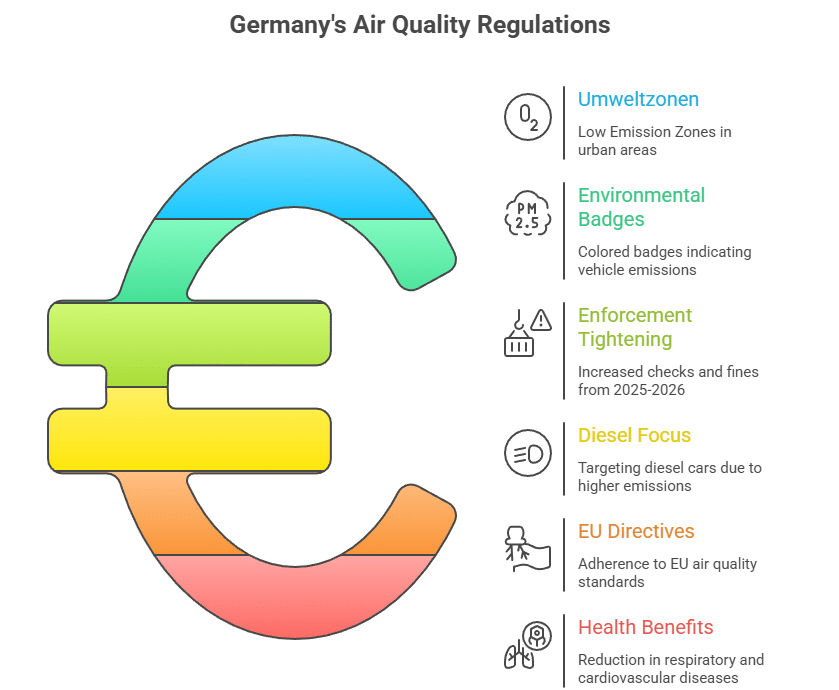
Deutschland führte ein Umweltzonen (Low Emission Zones) Im Jahr 2008 wurden sie als praktisches Instrument zur Reduzierung der Luftverschmutzung in dicht besiedelten Stadtgebieten eingeführt. Diese Zonen beschränken den Zugang je nach Schadstoffausstoß eines Fahrzeugs. farbige Umweltplaketten Das muss an der Windschutzscheibe angebracht sein. Das System soll verhindern, dass besonders umweltschädliche Fahrzeuge, vor allem ältere Dieselautos, aus den Stadtzentren fahren, wo die Luftqualitätsprobleme am gravierendsten sind.
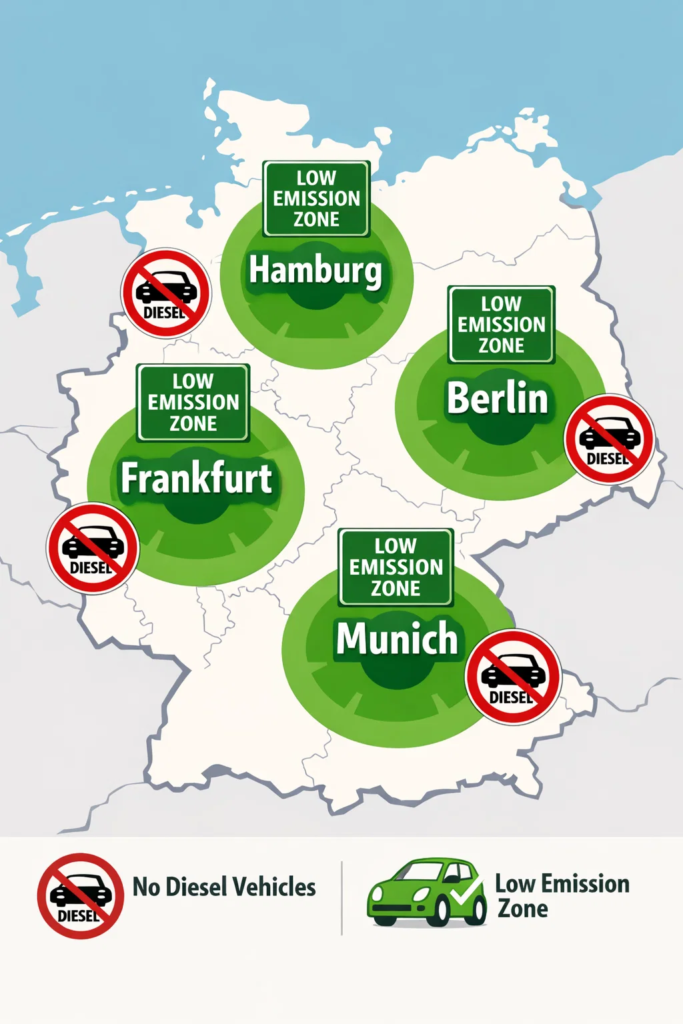
Ab dem Jahr 2026 gibt es etwa 56 aktive Umweltzonen in ganz Deutschland, das die meisten Großstädte wie z. B. abdeckt Berlin, München, Köln, Hamburg, Stuttgart, Düsseldorf und FrankfurtIn nahezu allen diesen Zonen Die Einfahrt ist auf Fahrzeuge mit grünem Umweltplakettenzeichen beschränkt.Dies schließt viele ältere Dieselmodelle aus, die die Mindestemissionsnormen nicht erfüllen. Im Alltag bedeutet dies, dass die Erreichbarkeit von zentralen Orten für Arbeit, Einkäufe oder Termine direkt von der Emissionsklasse Ihres Fahrzeugs abhängt.
Was sich jetzt ändert, ist nicht die Existenz von Umweltzonen, Aber wie streng sie durchgesetzt werden. Aus 2025–2026 und späterStädte verstärken die Kontrollen zur Einhaltung der Vorschriften durch Automatisierte Kamerasysteme, häufigere Straßenkontrollen und höhere Bußgelder für Verstöße.Gleichzeitig werden Ausnahmeregelungen, die bestimmten älteren Dieselfahrzeugen bisher einen eingeschränkten Zugang ermöglichten, reduziert oder ganz abgeschafft. Für Expats aus Ländern mit weniger strengen innerstädtischen Fahrbeschränkungen mag dies abrupt oder übermäßig streng erscheinen, stellt aber innerhalb des deutschen Rechtsrahmens eine Verbesserung dar. logischer nächster Schritt in einer langjährigen LuftreinhaltepolitikEs handelt sich eher um eine als um eine plötzliche Veränderung. Das mag sich zwar plötzlich anfühlen, aber in Deutschlands PolitikweltEs ist der nächste logische Schritt.
Warum Dieselautos im Mittelpunkt stehen
Dieselautos stehen im Mittelpunkt der deutschen Luftreinhaltepolitik, vor allem aus folgenden Gründen: Rechtliche Verpflichtungen gemäß der EU-Richtlinie über die Luftqualität, das verbindliche Grenzwerte für schädliche Schadstoffe wie z. B. festlegt Stickstoffdioxid (NO₂) Und Feinstaub (PM10 und PM2,5)Diese Schadstoffe stehen in engem Zusammenhang mit Atemwegs- und Herz-Kreislauf-Erkrankungen, insbesondere in dicht besiedelten städtischen Gebieten. Unter realen Fahrbedingungen Dieselmotoren – insbesondere Euro 4 und ältere Modelle – emittieren deutlich höhere NO₂-Werte. als Benzinautos, selbst wenn Labortests die Einhaltung der Vorschriften nahelegen. Infolgedessen geriet der Dieselverkehr nach mehreren Deutsche Städte wiederholt überschritten, was zu ... führte Rechtsstreitigkeiten, Gerichtsurteile und rechtsverbindliche Maßnahmenpläne für saubere LuftDas Ergebnis war nicht eindeutig Dieselverbotaber ein allmähliche Erhöhung des Drucks auf ältere Dieselfahrzeugeeinschließlich strengerer Zugangsregeln in Städten, erweiterter Umweltzonen und gezielte Fahrverbote auf bestimmten stark verschmutzten StraßenAlle diese Maßnahmen zielen darauf ab, die städtische Luftqualität wieder innerhalb der gesetzlich vorgeschriebenen Grenzwerte zu halten.
Deutschlands Umweltzonen umfassen rund 56 Städte und betreffen Millionen von Autofahrern.
Deutschlands Umweltzonen (LEZs), die jetzt umfassen rund 56 Städtehaben weitaus größere Auswirkungen, als vielen Fahrern zunächst bewusst ist. etwa 15 Millionen Dieselautos Auf deutschen Straßen, von denen viele ältere Modelle aufweisen, die die neueren Emissionsnormen nur schwer erfüllen, betreffen diese Regeln Millionen von Pendlern, Familien und Arbeitnehmern, die in städtischen Gebieten leben und arbeiten. Umweltzonen befinden sich typischerweise in Stadtzentren und dicht besiedelten Stadtteilen und schränken somit ein, wohin die Menschen zur Arbeit, zur Schule, zum Einkaufen und zum Alltag fahren können. GesundheitspflegeWichtig ist jedoch, dass die Wirksamkeit dieser Maßnahmen belegt ist. Studien aus mehreren deutschen Städten zeigen, dass nach der Einführung von Dieselbeschränkungen und einer strengeren Durchsetzung der Umweltzonen … Die Stickstoffdioxid-Werte (NO₂) sanken um etwa 10–20%Die größten Verbesserungen wurden entlang stark befahrener Straßen und in Wohngebieten beobachtet. Im Laufe der Zeit wurde diese sauberere Luft mit folgenden Faktoren in Verbindung gebracht: reduzierte GesundheitsrisikenDazu gehören niedrigere Raten von Asthma, Herz-Kreislauf-Erkrankungen und chronischen Lungenerkrankungen. Dieser messbare Nutzen für die öffentliche Gesundheit ist der Grund, warum politische Entscheidungsträger strengere Regeln für Umweltzonen nicht als Strafe für Autofahrer, sondern als notwendige und erfolgreiche Maßnahme, insbesondere zum Schutz der Bevölkerung, darstellen. Kinder, ältere Bewohner und andere schutzbedürftige Gruppen Leben in städtischen Umgebungen.
Warum dies im Jahr 2026 wichtiger ist
Jahrelang kamen viele Dieselfahrer mit Ausnahmeregelungen, lückenhafter Überwachung oder wenigen lokalen Kontrollen durch die Sache. Dieses Zeitfenster schließt sich. EU-Druck, gerichtliche Aufsicht, Und Neue Fahrzeugstandards am HorizontDas Jahr 2026 markiert einen Übergang von der schrittweisen Anpassung zu konsequente Durchsetzung.
Für Expats ist dieser Kontext wichtig, weil er eine zentrale Wahrheit verdeutlicht:
Diese Regeln sind nicht vorübergehend – und es ist unwahrscheinlich, dass sie wieder zurückgenommen werden.
Im nächsten Abschnitt werden wir uns Folgendes ansehen: Was genau ändert sich im Jahr 2026?und wie sich diese Aktualisierungen direkt auf Dieselfahrzeuge auswirken, insbesondere auf solche, die aus dem Ausland importiert oder in Deutschland gebraucht gekauft wurden.
Die Kern-Updates 2026: Was ändert sich für Dieselfahrzeuge?
Wenn Sie schon einmal Sätze gehört haben wie „Dieselverbot“ oder „Vorgehen bei der Euro 7“ Wenn du in Expat-Foren herumstöberst, atme erstmal tief durch. 2026 geht es nicht um ein plötzliches landesweites Dieselverbot.Es geht um ein klare Verschärfung der bestehenden Regeln die sich besonders auswirken ältere DieselfahrzeugeDenken Sie an Evolution, nicht an Schocktherapie.
Hier ist, einfach erklärt, was sich tatsächlich ändert.
1. Ende der roten und gelben Umweltabzeichen
Das deutsche Umweltabzeichensystem besteht schon seit vielen Jahren, aber Die Jahre 2025–2026 markieren einen entscheidenden Wendepunkt. wo ältere Parkausweise im alltäglichen Straßenverkehr praktisch verschwinden. Rote Parkausweise sind bereits in fast allen Städten verboten, und gelbe Parkausweise werden nun vollständig abgeschafft, sodass die grünes Abzeichen als Mindest- und Pflichtanforderung Für die Einfahrt in Umweltzonen in ganz Deutschland ist ein grünes Abzeichen erforderlich. Ab 2025/2026 dürfen Fahrzeuge ohne grünes Abzeichen in den meisten Städten nicht mehr in diese Zonen einfahren, mit wenigen Ausnahmen. Für Dieselfahrzeuge bedeutet der Erhalt eines grünen Abzeichens in der Regel, dass sie mindestens die folgenden Kriterien erfüllen: Euro-4-AbgasnormIn seltenen Fällen können einige Euro-3-Dieselfahrzeuge noch die Voraussetzungen erfüllen, wenn sie mit offiziell zugelassenen Partikelfiltern nachgerüstet wurden. Diese Nachrüstungen sind jedoch oft teuer und wirtschaftlich nicht mehr rentabel. Erhält ein Dieselfahrzeug keine grüne Plakette, verliert es faktisch die Fahrerlaubnis in Innenstädten, auch wenn es auf Autobahnen oder im ländlichen Raum weiterhin zugelassen ist. Diese Änderung führt kein neues System ein, sondern schließt langjährige Gesetzeslücken und sorgt für klarere, strengere und einheitlich durchgesetzte Verkehrsregeln in ganz Deutschland.
2. Euro-7-Normen: Was sie wirklich für Dieselfahrer bedeuten
Der mit Spannung erwartete Euro-7-Standard wird offiziell für alle neu verkauften Pkw und Transporter gelten ab November 2026Für derzeitige Dieselfahrzeugbesitzer bedeutet dies kein sofortiges Verbot oder die Ungültigerklärung ihres Fahrzeugs, aber es signalisiert die Richtung künftiger Regulierungen und schafft die Voraussetzungen für strengere Emissionsvorschriften im Laufe der Zeit.
Für neue Fahrzeuge bringt Euro 7 einige wichtige Änderungen mit sich. Erstens, Stickoxid-Grenzwerte (NOx) sind nun für Benzin- und Dieselfahrzeuge vereinheitlicht, ungefähr 60–80 mg/kmDadurch wird eine strengere Kontrolle dieses schädlichen Schadstoffs gewährleistet. Zweitens fügt Euro 7 hinzu neue Vorschriften zu Bremsstaub- und ReifenabriebemissionenDrittens wird die Einhaltung der Emissionsgrenzwerte nun verpflichtend sein, um bisher weniger überwachte, aber in städtischen Gebieten bedeutende Verschmutzungsquellen zu erfassen. über die gesamte Lebensdauer des Fahrzeugs, die sich von heute etwa 100.000 km bis 160.000–200.000 km unter Euro 7Dadurch wird sichergestellt, dass die Fahrzeuge länger sauber bleiben.
Für im Ausland lebende Ausländer sind diese Änderungen auch dann wichtig, wenn sie bereits ein Dieselauto besitzen. Euro-6-Dieselfahrzeuge Sie werden vorerst weiterhin in den meisten Umweltzonen akzeptiert, Ihre Mobilität ist also größtenteils sicher. Euro 7 setzt einen höheren Standard für künftige Einkäufe und Importe.Das bedeutet, dass alle neuen oder importierten Dieselfahrzeuge strengere Emissionskriterien erfüllen müssen. Darüber hinaus können Städte ihre lokalen Umweltzonenregeln schrittweise an die Euro-7-Norm anpassen, mitunter sogar vor Inkrafttreten nationaler Vorgaben.
Zusamenfassend, Euro 7 verbietet Ihren aktuellen Dieselmotor nicht.Es ist aber ein deutliches Signal dafür, wohin die deutsche Luftreinhaltepolitik führt und sich auf die zukünftige Fahrzeugwahl, den Wiederverkaufswert und die Erreichbarkeit der Stadt auswirkt.
3. Keine landesweite Dieselverbot—Aber weitere Einschränkungen auf Stadtebene
Deutschland hat derzeit kein landesweites DieselverbotUnd auch für 2026 wird kein weiterer erwartet. Stattdessen liegt der Fokus auf Beschränkungen auf StadtebeneDadurch erhalten die lokalen Behörden die Befugnis, gezielte Grenzwerte dort festzulegen, wo die Umweltverschmutzung am höchsten ist. Einige Städte haben diese Maßnahmen bereits umgesetzt. Zum Beispiel: Stuttgart hat selektive Verbote für Euro-4- und bestimmte Euro-5-Dieselfahrzeuge, während München und Hamburg Die Einhaltung von Dieselgrenzwerten auf bestimmten Straßen oder in bestimmten Zonen wird eingeschränkt. Gerichte unterstützen die lokalen Behörden und erlauben ihnen, die Regeln weiter zu verschärfen, falls die Grenzwerte für die Luftqualität erneut überschritten werden.
Für Expats bedeutet dies, dass Ihr Dieselauto zwar möglicherweise landesweit legal erlaubtDer Zugang kann je nach den Gegebenheiten weiterhin eingeschränkt sein. Stadt und die Emissionsklasse Ihres FahrzeugsDie Regeln sind nicht immer einheitlich und können sogar innerhalb von Stadtvierteln oder auf bestimmten Straßen variieren. Daher ist es beim Autofahren in deutschen Städten unerlässlich, die lokalen Vorschriften genau zu beachten und sich nicht allein auf das nationale Recht zu verlassen. Diese uneinheitliche Regelung unterstreicht, wie wichtig es ist, sich über die jeweiligen Umweltzonen und -beschränkungen in den Städten, in denen man lebt, arbeitet oder unterwegs ist, zu informieren.
Bis 2026 werden etwa 15–201.300 ältere Dieselfahrzeuge in Umweltzonen Beschränkungen unterliegen.
Um die Tragweite zu verdeutlichen:
- Deutschland hat rund 15 Millionen Dieselautos
- Eine geschätzte 2–3 Millionen ältere Dieselmotoren Schwierigkeiten, die Anforderungen für das grüne Abzeichen zu erfüllen
- Diese Fahrzeuge sind am stärksten von den LEZ-Regeln und städtischen Fahrverboten betroffen.
- Euro 6 und neuere Dieselfahrzeuge bleiben vorerst in den meisten Zonen ausgenommen
- Euro 7 betrifft nur Neuverkäufe, signalisiert aber eindeutig eine künftige Verschärfung
Die Mehrheit der Dieselfahrer wird also nicht unmittelbar betroffen sein. Besitzer älterer oder importierter Dieselfahrzeuge werden den Druck als Erste spüren..
Die wichtigste Erkenntnis für Expats
Bei den Updates von 2026 geht es nicht darum, Fahrer zu bestrafen, sondern darum Schlupflöcher schließenDeutschland geht von einer flexiblen Durchsetzung zu konsistente, vorhersehbare Regeln in verschiedenen Städten.
Wenn Ihr Diesel einen grünes AbzeichenSie sind heute weitgehend sicher.
Wenn nicht, Die Mobilität im städtischen Deutschland wird zunehmend eingeschränkt sein..
Im nächsten Abschnitt werden wir genauer hinsehen auf wie diese Änderungen betreffen Auswanderer speziellinsbesondere diejenigen, die Autos aus dem Ausland mitbringen, gebrauchte Diesel kaufen oder einen längeren Aufenthalt in Deutschland planen.
Direkte Auswirkungen auf Diesel-Pkw-Besitzer: Einschränkungen, Kosten und Mobilität
Für im Ausland lebende Ausländer, die Dieselautos fahren, sind die Regeln von 2026 keine abstrakte Politik, sondern sie zeigen sich in der Praxis. Alltagsroutinen, finanzielle Entscheidungen und BewegungsfreiheitAuch wenn Ihr Auto in Deutschland technisch gesehen straßenzugelassen ist, Wo Man kann es fahren (und zu welchem Preis), das ändert sich schnell.
Schauen wir uns an, was das in der Praxis bedeutet.
Alltagsrealität: Wo man fahren darf und wo nicht
Der unmittelbarste Auswirkung der deutschen Dieselregeln von 2026 Die Regelung ist zwar einfach, kann aber mitunter störend sein: Für die Zufahrt in die Innenstädte ist eine grüne Umweltplakette erforderlich. Für Dieselfahrer bedeutet dies im Alltag einige Herausforderungen. Fahrzeuge ohne diese Plakette dürfen nicht in Umweltzonen einfahren, und Verstöße können Bußgelder von 100 € oder mehr sowie Verwaltungsgebühren nach sich ziehen. Städte setzen zunehmend auf Stichproben, automatische Kameras und die Durchsetzung der Regeln vor Ort, wodurch es schwieriger wird, die Vorschriften zu umgehen. Ältere Dieselfahrzeuge, insbesondere Modelle der Euro-3-Norm und älter, sind in den meisten Stadtzentren praktisch nicht mehr zugelassen, was ihren legalen Fahrbetrieb stark einschränkt.
Für Expats leben In oder in der Nähe von Stadtzentren beeinträchtigen diese Einschränkungen den Alltag. Tägliche Fahrten zur Arbeit, Bringen und Abholen von Kindern zur Schule, Arztbesuche, Einkaufsbummel und Treffen mit Freunden Alle Fahrzeuge mit Dieselmotor erfordern sorgfältige Planung. Auch wenn Sie möglicherweise noch legal Besitzen Sie Ihr DieselautoDie Nutzung in städtischen Gebieten stellt eine logistische Herausforderung dar und zwingt Autofahrer, alternative Routen, öffentliche Verkehrsmittel oder sogar vorübergehende Fahrzeugwechsel in Betracht zu ziehen, um mobil zu bleiben. Die wichtigste Erkenntnis ist, dass das Fahren in der Stadt für ältere Dieselbesitzer nicht mehr so flexibel ist. Planung und Einhaltung der Vorschriften sind für den Alltag unerlässlich..
Die finanziellen Folgeeffekte
Beschränkungen schränken nicht nur die Mobilität ein, sondern belasten auch den Geldbeutel auf subtilere Weise.
Zu den wichtigsten Kostenfaktoren zählen:
- Der Wiederverkaufswert sinkt für nicht konforme Dieselfahrzeuge
- Nachrüstungskosten (wo technisch möglich) stoßen wir oft auf Tausende von Euro
- Früher als geplant Fahrzeug-Upgrades oder -Ersatz
- Der Wert importierter Dieselmotoren, die nicht den deutschen Standards entsprechen, wurde reduziert.
Bei vielen älteren Dieselmodellen ist eine einfache Nachrüstung möglich. Das macht wirtschaftlich keinen Sinn.Das stellt Expats vor schwierige Entscheidungen: mit Verlust verkaufen, die Nutzung einschränken oder das Fahrzeug früher als erwartet wechseln.
Mobilitätseinbußen: Noch legal, aber weniger praktisch
Eine entscheidende Nuance: Die meisten mit Auflagen versehenen Dieselfahrzeuge dürfen außerhalb von Umweltzonen weiterhin legal besessen und gefahren werden.Autobahnen, ländliche Gebiete und kleinere Städte bleiben oft erreichbar.
Aber im wirklichen Leben:
- Jobs gibt es in Städten
- Schulen befinden sich in Städten
- Die Dienstleistungen werden in Städten angeboten.
Das Auto ist also nicht gänzlich verboten. Sein Nutzen nimmt abinsbesondere wenn Sie in Berlin, Stuttgart, München oder Köln wohnen.
Auswirkungen in der Praxis: NO₂-Werte sinken in Sperrzonen um bis zu 15–201 TP3T, aber Hunderttausende Fahrzeuge sind weiterhin betroffen.
Die realen Auswirkungen der deutschen Dieselbeschränkungen präsentiert ein gemischtes, aber informatives Bilddie ökologischen Vorteile mit den praktischen Herausforderungen, denen sich die Fahrer gegenübersehen, in Einklang zu bringen.Im Umweltbereich zeigen Studien aus Städten wie Stuttgart und Darmstadt, dass die NO₂-Werte in Gebieten mit Dieselverboten um etwa 5–151 µg/m³ gesunken sind, wobei in besonders belasteten Gebieten sogar Reduzierungen von bis zu 201 µg/m³ verzeichnet wurden. Die Verbesserungen waren vor allem an stark befahrenen Straßen und in Wohngebieten deutlich spürbar und kamen den am stärksten von der Luftverschmutzung betroffenen Anwohnern direkt zugute. Langfristig tragen diese Maßnahmen für sauberere Luft zu weniger umweltbedingten Erkrankungen, weniger Krankenhausaufenthalten und einer geringeren Rate vorzeitiger Todesfälle bei und bieten somit klare Vorteile für die öffentliche Gesundheit.
Jedoch auf der Fahrer Der Übergang kann kostspielig und mitunter störend sein. Allein in Berlin waren laut historischen Daten über 200.000 Fahrzeuge in verschiedenen Phasen von den Umweltzonen-Beschränkungen betroffen. Viele dieser Fahrzeuge gehörten Haushalten mit geringem Einkommen, Handwerkern oder Neuankömmlingen, die mit den deutschen Umweltvorschriften weniger vertraut waren. Auch Expats fallen oft in diese Kategorie, insbesondere Fahrer importierter Dieselfahrzeuge oder Fahrzeuge, die nur kurzfristig genutzt werden. Für sie ist die Einhaltung der Vorschriften eine steile Lernkurve. Kurz gesagt: Obwohl sich die Luftqualität verbessert, profitieren nicht alle gleichermaßen, und Dieselfahrer – insbesondere Besitzer älterer Fahrzeuge – tragen die Hauptlast der Umstellung. Dies unterstreicht die Wichtigkeit von Planung und Information für alle, die in deutschen Städten auf Dieselfahrzeuge angewiesen sind.
Eine faire Bewertung für Expats
Deutschlands Ansatz versucht, ein Gleichgewicht herzustellen. Fortschritte im Bereich der öffentlichen Gesundheit mit schrittweise DurchsetzungFrustration ist jedoch verständlich, insbesondere wenn man seinen Umzug um ein Auto herum geplant hat, das sich plötzlich unerwünscht anfühlt.
Die wichtigste Erkenntnis:
Diese Regeln verbessern die LuftqualitätSie verändern aber auch die persönliche Mobilität.
Im nächsten Abschnitt werden wir uns speziell auf Folgendes konzentrieren: Expats: Importierte Fahrzeuge, Ausnahmeregelungen, Zulassungsanträge und wie Sie entscheiden können, ob es sich im Jahr 2026 und darüber hinaus noch lohnt, Ihren Diesel zu behalten.
Warum Expats die Auswirkungen spüren: Besondere Herausforderungen und Risiken
Wenn Sie denken, „Deutsche Autofahrer verstehen dieses System wahrscheinlich besser als ich.“Da hast du recht. Und genau deshalb Im Ausland lebende Ausländer spüren die Auswirkungen der Luftreinhaltebestimmungen deutlich stärker.selbst wenn man völlig legale Autos fährt. Das Problem sind nicht böse Absichten; es ist Ungewohnte Systeme, versteckte Verwaltungsschritte und lokale Regeln, die nicht immer offensichtlich sind..
Hier wird die Sache knifflig. speziell für Sie als Expat.
Ausländische Kennzeichen, gleiche Regeln: Keine automatischen Ausnahmen
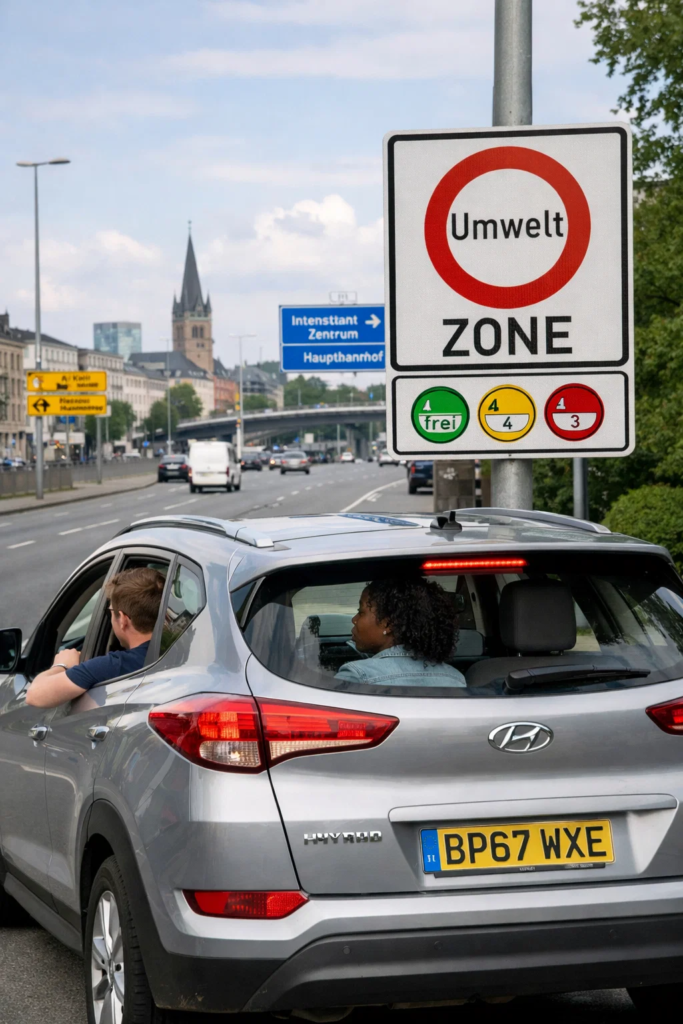
Ein weit verbreiteter Irrglaube unter Neuankömmlingen in Deutschland ist, dass Ausländisch zugelassene Fahrzeuge erhalten automatisch eine kostenlose Durchfahrt. Bei Umweltzonen (Low Emission Zones, LEZs) ist dies nicht der Fall. Alle Fahrzeuge, unabhängig von ihrer Zulassung, müssen die gleichen Umweltauflagen erfüllen. Für Expats bedeutet dies, dass vorübergehende Einfuhren müssen die LEZ-Standards erfüllen, und sogar Firmenwagen, die in einem anderen EU-Land zugelassen sind sind nicht ausgenommen. Kurzzeitaufenthalte in Deutschland sind es. keine automatischen Ausnahmen gewähren entweder.
Um in einer Umweltzone legal fahren zu können, müssen Sie Ich benötige noch eine Umweltplakette. Wird an Ihrer Windschutzscheibe angezeigt. Ausländer können diese Plakette über verschiedene Wege beantragen: Online-Portale (viele davon sind englischsprachig), via TÜV- oder DEKRA-Prüfstellenoder bei örtliche Kfz-ZulassungsstellenDer entscheidende Punkt ist jedoch, dass Der Ausweis wird nicht automatisch ausgestelltViele Neuankömmlinge gehen fälschlicherweise davon aus, dass ihr Fahrzeug mit einem Euro-6-Dieselmotor automatisch die Abgasnorm erfüllt. Bußgelder drohen jedoch oft erst, wenn man ohne das entsprechende Emblem fährt. Daher ist eine frühzeitige Beantragung und Überprüfung unerlässlich, um Strafen zu vermeiden und eine reibungslose Mobilität in deutschen Städten zu gewährleisten.
Papierkram trifft auf Sprachbarrieren
Selbst wenn die Regeln klar formuliert sind, Sprachbarrieren können die Einhaltung von Vorschriften für Expats erschweren.Viele offizielle Portale und Anwendungsseiten sind Nur auf Deutsch verfügbarDas kann verwirrend sein, wenn man die Sprache nicht fließend spricht. Ausländische Zulassungsdokumente enthalten oft komplexe Emissionscodes die schwer zu interpretieren sind, und Anweisungen darüber, wer Anspruch auf einen grünen Ausweis oder Ausnahmen hat, können sein unklar oder widersprüchlichSelbst eine scheinbar einfache Aufgabe – wie die Bestellung einer Umweltplakette – kann sich als schwierig erweisen. Lieferverzögerungen Nach Ihrer Ankunft sind Sie dann unsicher, ob Sie in Stadtzentren legal Auto fahren dürfen. Für Neuankömmlinge können diese administrativen Hürden einen eigentlich schnellen Schritt zu einem Problem machen. wochenlanger Stress, wobei die Bedeutung von Vorbereitung und frühzeitigem Handeln hervorgehoben wird.
Die städtischen Regeln sind nicht einheitlich.
Eine weitere Herausforderung für Expats ist, dass Die Regeln für Umweltzonen sind in Deutschland nicht einheitlich.Sie können nicht nur von Stadt zu Stadt, sondern manchmal sogar von einzelnen Straßen innerhalb einer Stadt variieren. Zum Beispiel in Hamburg, bestimmte Straßen sind ausschließlich für Euro-6-Dieselfahrzeuge, während Stuttgart Sie setzt strengere Dieselverbote durch als viele andere Städte. Selbst innerhalb desselben Ballungsraums können die Regeln von Stadtteil zu Stadtteil oder von Zone zu Zone unterschiedlich sein.
Für Expats, die Umziehen zwischen Städten, Jobwechsel oder Pendeln durch verschiedene RegionenDas bedeutet, dass Sie oft Folgendes benötigen: Überprüfen Sie die Einhaltung der Vorschriften in jedem Bereich, den Sie befahren.Anders als Einheimische, die diese Regeln meist aus Gewohnheit kennen, ist es unerlässlich, sich über die städtischen Vorschriften für Umweltzonen zu informieren, um Bußgelder zu vermeiden, die Mobilität aufrechtzuerhalten und die täglichen Wege effektiv zu planen.
Expats in Deutschland: ~12% sind auf Autos angewiesen, riskieren aber oft Bußgelder ohne Aktualisierungen.
In Deutschland etwa 10–151 TP3T der Einwohner sind Expats oder internationale Migranten.und ein bedeutender Teil von ihnen, insbesondere Familien und EU-Umziehende, auf Autos angewiesen sein für alltägliche Aktivitäten wie den Arbeitsweg, das Bringen und Abholen der Kinder oder regionale Reisen. Der Besitz von Dieselfahrzeugen ist besonders bei Personen, die regelmäßig grenzüberschreitend umziehen, weit verbreitet, was teilweise auf Folgendes zurückzuführen ist: frühere Anreize zur Steigerung der Kraftstoffeffizienz in anderen Ländern.
Die Daten der Strafverfolgungsbehörden und städtische Umfragen zeigen jedoch, dass Tausende von Bußgeldern werden jedes Jahr verhängt. für Fahrer, die unbeabsichtigt gegen die Regeln verstoßen. Häufige Gründe sind: nicht zu wissen, dass ein grüner Ausweis erforderlich istunter der Annahme, dass Ausländisch zugelassene Fahrzeuge sind automatisch befreit.oder fehlen stadtspezifische DieselbeschränkungenMit anderen Worten, das Risiko für Expats ist nicht Rücksichtslosigkeitsondern vielmehr Mangelndes Bewusstsein und Verständnis für die spezifischen deutschen LuftreinhaltebestimmungenDies unterstreicht, wie wichtig es ist, sich auf dem Laufenden zu halten und proaktiv Maßnahmen zur Einhaltung der Vorschriften zu ergreifen.
Die befreiende Wahrheit für Expats
Die gute Nachricht ist: Sobald Sie das System verstanden haben, Es ist machbar.
- Die Regeln werden veröffentlicht
- Die Schritte zur Einhaltung der Vorschriften sind endlich.
- Die meisten Bußgelder sind vermeidbar
Für einen Expat liegt der entscheidende Vorteil darin, dass frühes BewusstseinMit etwas Vorbereitung, der Überprüfung Ihrer Emissionsklasse, der Bestellung des richtigen Ausweises und der Kenntnis der städtischen Vorschriften können Sie Hunderte von Euro und viel Stress sparen.
Im nächsten Abschnitt werden wir praktisch: Was Sie jetzt tun sollten wenn Sie in Deutschland ein Dieselfahrzeug besitzen (oder planen, eines zu kaufen oder zu importieren), das den Vorschriften von 2026 entspricht.
Praktische Schritte: Wie Sie sich anpassen und weiterfahren können
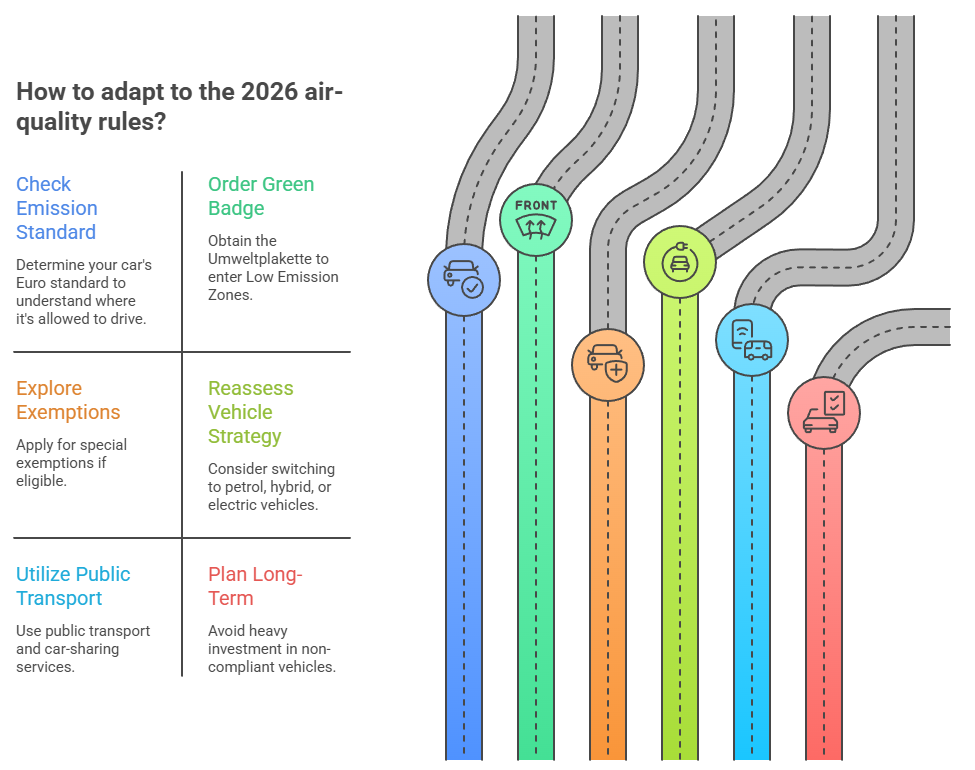
Um in Deutschland weiterhin Auto fahren zu dürfen, gilt die Luftqualitätsregeln 2026Das Wichtigste ist, Handeln Sie frühzeitig und befolgen Sie einen klaren Plan.. Der Der erste und wichtigste Schritt ist um die Euro-Abgasnorm Ihres Autos zu überprüfen, als Dies bestimmt wo Ihr Fahrzeug legal fahren darfDiese Informationen finden Sie in Ihrem Zulassungsbescheinigung Teil I, indem man die Emissionsschlüsselnummeroder indem man fragt TÜV, DEKRA oder der FahrzeugherstellerDieser Schritt ist wichtig, weil Dieselfahrzeuge der Euro-4-Norm und neuer sind in der Regel für das grüne Umweltabzeichen qualifiziert., während Dieselfahrzeuge der Euro-3-Klasse oder älter werden in den Stadtzentren zunehmend eingeschränkt.Falls es irgendwelche Zweifel gibt, Eine schnelle TÜV-Prüfung kann teure Fehler und Bußgelder verhindern..
Nach Bestätigung der Berechtigung folgt der nächste Schritt Schritt ist um zu bestellen die grüne UmweltplaketteDies ist eines der die häufigsten Versäumnisse von Auswanderern, obwohl billig, schnell und obligatorischDas Abzeichen kostet normalerweise 5–10 €kommt innerhalb 3–7 Tageund ist Auch für im Ausland zugelassene Fahrzeuge erforderlichEs kann bestellt werden über offizielle städtische Websites, TÜV- oder DEKRA-Büros oder Online-Portale mit englischsprachiger AnleitungOhne diesen Aufkleber wird auf Ihrer Windschutzscheibe angezeigt, die eintreten Umweltzone kann zu Bußgelder – selbst wenn Ihr Auto die Abgasnorm erfüllt..
Manche Fahrer könnten sich für Folgendes qualifizieren SonderbefreiungenAber das sind beschränkt und niemals automatischMögliche Ausnahmen umfassen historische Fahrzeuge (H-Kennzeichen), Fahrzeuge, die für Menschen mit Behinderungen angepasst wurden, Und Einsatz- oder SonderfahrzeugeWichtig ist, Es gibt keine Ausnahmen allein aufgrund des Status als Expat, des Besitzes ausländischer Kennzeichen oder eines vorübergehenden Aufenthalts. DeutschlandWenn Sie glauben, dass Sie die Voraussetzungen erfüllen, Sie müssen sich bei Ihrer örtlichen Behörde anmelden, bevor Sie Sperrzonen betreten dürfen..
Wenn Ihr Dieselfahrzeug Grenzbereich oder NichteinhaltungEs ist klug, Überprüfen Sie Ihre Fahrzeugstrategie mittelfristig.Viele Expats entscheiden sich entweder für Benziner, die weniger von den Umweltzonenregeln betroffen sind, oder steigen auf Hybrid- oder Elektrofahrzeuge um. Neuere Euro-6-Dieselwagen sind zwar noch weit verbreitet, aber zukünftige Einschränkungen sind wahrscheinlich. Bei der Entscheidung ist es wichtig, Vergleich der gesamten Besitzkosten, einschließlich Steuern, Wiederverkaufswert, Stadtanbindung und Parkvorteile, nicht nur der Kaufpreis.
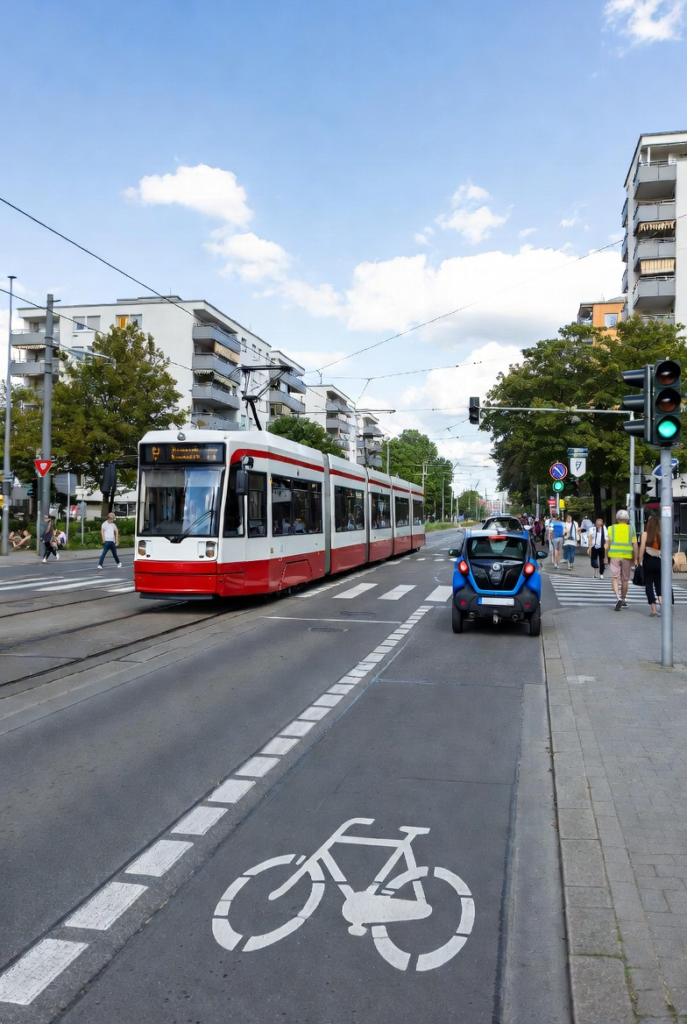
Vor allem in Großstädten stellen viele Expats fest, dass Der Besitz eines Autos in Vollzeit ist nicht immer notwendigDeutschland bietet hervorragendes öffentliches Verkehrsnetz, unterstützt von Apps wie DB Navigatorstädtische Verkehrsinstrumente, Und Routenplaner wie Moovit. Carsharing-Dienste (ShareNow, Miles, Sixt Share) und fahrradfreundliche Infrastruktur flexible Alternativen anbieten. Diese Optionen für einen kurzen Zeitraum testen kann erheblich Stress, Kosten und Abhängigkeit von eingeschränkten Fahrzeugen reduzieren.
Schließlich ist es entscheidend, Denken Sie langfristig und warten Sie nicht darauf, dass die Wiederverkaufswerte von Dieselfahrzeugen weiter sinken.. Ältere Dieselfahrzeuge stehen bereits unter starkem Marktdruck.Und es ist unwahrscheinlich, dass sich dieser Trend umkehrt. Es gibt Nachrüstlösungen.Sie sind selten und oft teuer. Planen Sie frühzeitig einen Eintausch?, Einstellung eines klare Ausstiegszeitleiste, Und Vermeidung hoher Investitionen in nicht konforme Fahrzeuge kann Sie finanziell schützen.
Für Expats ist die Quintessenz einfach: Es gibt Kein Grund zur PanikAber du Wir brauchen einen Plan.. Von Überprüfung Ihrer Emissionsnorm, Sicherung des grünen Abzeichens, Verfolgung stadtspezifischer Regeln, Und Alternative Mobilitätsoptionen bereithalten, du kannst Bleiben Sie mobil, vermeiden Sie Bußgelder und leben Sie auch nach 2026 sorgenfrei in Deutschland..
Blick in die Zukunft: Jenseits von 2026 und auf dem Weg in eine sauberere Zukunft
Der Die Aktualisierungen zur Luftqualität im Jahr 2026 stellen kein Endziel dar.Es handelt sich jedoch um eine klare Übergangsphase in Deutschlands langfristiger Mobilitäts- und Umweltstrategie. Für Deutschland und die gesamte EU signalisieren diese Veränderungen einen stetigen Wandel hin zu Sauberere Städte, gesündere Einwohner und berechenbarere VerkehrsregelnFür Sie als Expat ist diese Phase am besten als einmalige Anpassungsphase zu betrachten. Sobald Sie das neue System verstanden und sich daran gewöhnt haben, wird der Alltag reibungsloser verlaufen – mit weniger Überraschungen, Bußgeldern oder kurzfristigen Regeländerungen. Statt ständiger Unsicherheit soll der Rahmen für die Zeit nach 2026 Klarheit und Stabilität für alle bieten, die langfristig in Deutschland leben und arbeiten möchten.
Euro 7 und der Weg bis 2035: Wohin geht die Reise?
Der Euro-7-Standard soll nicht dazu dienen, Fahrer zu bestrafen, sondern als Brücke zwischen dem heutigen gemischten Fahrzeugbestand und dem für 2035 in der EU geplanten Ausstieg aus neuen Pkw mit Verbrennungsmotor.Ab Ende 2026 wird die Euro-7-Norm die Erwartungen an reale Emissionen und Fahrzeuglebensdauer erhöhen und so für eine längere Lebensdauer sauberer Fahrzeuge sorgen. Gleichzeitig ist mit einer Ausweitung der Umweltzonen zu rechnen, insbesondere in dicht besiedelten Ballungsräumen, da die lokalen Regelungen schrittweise an die übergeordneten Klima- und Gesundheitsziele der EU angeglichen werden. Wichtig ist, dass diese Änderungen Jahre im Voraus angekündigt werden, wodurch das Risiko plötzlicher politischer Umbrüche reduziert wird. Für Expats, die in Deutschland Karriere, Familie oder langfristige Finanzen planen, bietet diese lange Vorlaufzeit wertvolle Planungssicherheit.
Sauberere Luft bedeutet ein besseres Alltagsleben – insbesondere für Familien.
Einer der am meisten übersehenen Vorteile strengerer Luftreinhaltevorschriften ist deren Auswirkung auf LebensqualitätMit sinkenden Schadstoffbelastungen Kinder haben seltener Asthma und Atemwegsprobleme, während Ältere Erwachsene weisen ein geringeres kardiovaskuläres Risiko auf.Städte werden auch ruhiger, sicherer und angenehmerDie verbesserte Luftqualität fördert das Wachstum von Grünflächen, Radwegen und fußgängerfreundlichen Vierteln. Für Expats, die Familien gründen oder sich langfristig niederlassen möchten, bedeutet dieser Wandel nicht nur die Einhaltung gesetzlicher Vorschriften, sondern auch einen gesünderen Alltag.
Der Weg bis 2035: Hin zu nahezu emissionsfreiem Verkehr
Auf EU-Ebene ist das langfristige Ziel zwar ambitioniert, aber klar: ein 90–100% Reduzierung der verkehrsbedingten CO₂-Emissionen bis 2050Dies würde bedeuten, die schädlichen Emissionen in den Mitgliedstaaten um Millionen Tonnen zu reduzieren. Studien im Bereich der öffentlichen Gesundheit belegen, dass durch diese Reduzierungen Zehntausende vorzeitige Todesfälle verhindert werden. bis Mitte des JahrhundertsDeutschlands Umweltzonen, die Dieselbeschränkungen und die Förderung von Elektrofahrzeugen sind allesamt Teil dieser umfassenderen Strategie. Das Jahr 2026 stellt eine der letzten großen Anpassungsphasen dar, bevor sich der Übergang weiter beschleunigt..
Im Übergang verborgene Chancen
Während Dieselbeschränkungen oft die Schlagzeilen beherrschen, eröffnet der Übergang auch neue Möglichkeiten neue Möglichkeiten für ExpatsDie Subventionen und Steuervorteile für Elektrofahrzeuge entwickeln sich zwar weiter, sind aber nach wie vor bedeutend, und viele Städte bieten entsprechende Programme an. bevorzugte Parkplätze oder Zugangsvergünstigungen für emissionsarme Fahrzeuge. Deutschlands Weltklasse-Öffentlichkeit Das Transportsystem wird weiter ausgebautFlexible Carsharing-Dienste setzen zunehmend auf Elektro- oder Hybridfahrzeuge. Für viele Expats reduziert diese Entwicklung den Bedarf an einem eigenen Auto gänzlich und spart so Geld und Nerven.
Ein beruhigender Schlussgedanke für Expats
Die wichtigste Lektion ist einfach: Sich einmal anzupassen ist viel einfacher als ständig zu reagieren.Wer sich die Zeit nimmt, die Regeln zu verstehen, konforme Mobilitätsoptionen wählt und vorausschauend plant, anstatt zu hetzen, für den wird das Leben in Deutschland nach 2026 einfacher, nicht schwieriger. Der Weg zu saubererer Luft bedeutet nicht Einschränkung, sondern … Ihren Lebensstil zukunftssicher gestalten in einem der am besten organisierten und lebenswertesten Länder Europas. Für Expats, die sich frühzeitig einleben, ist der Weg nach vorn klarer, gesünder und weitaus weniger stressig, als es zunächst scheinen mag.
Fazit: Bleiben Sie informiert, bleiben Sie mobil in Deutschland
Deutschlands Luftqualitätsvorschriften 2026 Das kann sich anfangs überwältigend anfühlen, besonders für Auswanderer, die einen Dieselwagen fahren. Die wichtigste Erkenntnis ist jedoch beruhigend: Dies ist kein plötzliches oder pauschales Dieselverbot.; Es ist ein vorhersehbar, allmählicher Übergang hin zu saubereren Städten und klareren Mobilitätsregeln. Sobald man das System verstanden hat, wird die Einhaltung der Regeln überschaubar statt stressig.
Im Zentrum dieser Veränderungen stehen Umweltzonen, die fest etabliert sind und auch weiterhin bestehen werden. Ab 2025/2026 nur noch Fahrzeuge mit grünem Umweltabzeichen. wird der Zutritt zu allen LEZs gestattet sein. Euro-6-Dieselfahrzeuge bleiben vorerst weitgehend unberührt.Ältere Dieselfahrzeuge sehen sich zunehmenden Zugangsbeschränkungen und sinkenden Wiederverkaufswerten gegenüber. Wichtig für Expats: Für im Ausland zugelassene Fahrzeuge und vorübergehende Einfuhren gelten die gleichen Regeln., ohne automatische Ausnahmen. Obwohl Die Euro-7-Normen gelten nur für neue Fahrzeuge.Sie zeigen deutlich die Richtung auf, die künftige städtische Regulierungen wahrscheinlich einschlagen werden. Frühzeitiges Handeln, beispielsweise durch Überprüfung der Einhaltung von Vorschriften, Planung von Modernisierungen oder Prüfung von Alternativen, kann Sie vor unnötigen Bußgeldern, Stress und Entscheidungen in letzter Minute bewahren.
Mit Blick auf die Zukunft ist die klügste Vorgehensweise eine vorausschauende Vorbereitung. Prüfen Sie die Euro-Abgasnorm Ihres Fahrzeugs., bestellen Sie eine grüne Umweltplakette Wenn Ihr Auto die Voraussetzungen erfüllt, und bleiben Sie auf dem Laufenden über stadtspezifische Dieselregeln Wo auch immer Sie wohnen oder arbeiten. Es lohnt sich auch, langfristige Mobilitätsoptionen zu prüfen, wie beispielsweise den Umstieg auf ein umweltfreundlicheres Fahrzeug, die Nutzung von Carsharing-Angeboten oder die verstärkte Nutzung des hervorragenden öffentlichen Nahverkehrsnetzes in Deutschland. Offizielle Tools von Regierung und Stadtverwaltungen beschleunigen diesen Prozess erheblich, und das Speichern dieser Tools spart später Zeit.
Im größeren Zusammenhang geht es bei diesen Vorschriften nicht nur um die Einhaltung der Bestimmungen; es geht auch um Sauberere Luft, gesünderes Leben in der Stadt und langfristige PlanungssicherheitFür Expats führt die einmalige Anpassung anstatt wiederholter Reaktionen dazu, dass Ein reibungsloserer Alltag, bessere Planung und weniger unangenehme Überraschungen.Bleiben Sie informiert, bleiben Sie mobil und genießen Sie das Leben in Deutschland. ohne das Diesel-Dilemma.

 German
  English